Industrial floor grinding vs leveling for trip hazards 2026
⏱️ 8 min read · Last updated: 2026
- The widely cited trip hazard threshold on industrial walking surfaces is a vertical change of ¼ inch (6 mm) — enough to trigger regulatory exposure under OSHA 29 CFR 1910.22.
- Diamond grinding is typically effective for vertical offsets up to approximately 1.5 inches; larger drops usually require leveling the slab before any surface grinding.
- Diamond grinding commonly costs $3–$8 per square foot; polyurethane foam injection leveling typically runs $5–$25 per square foot depending on void depth and slab area.
- A ground-down trip hazard on a settling slab commonly recurs within 1–3 years if the underlying void is not filled first.
- Polyurethane foam injection (such as PolyLevel by NexGen) cures in 15–30 minutes; diamond grinding allows immediate return to service with no cure time at all.
A quarter-inch vertical offset is all it takes to cross the trip hazard threshold — smaller than a pencil eraser, and smaller than most facility managers expect when they first measure the problem. The question of industrial floor grinding vs leveling for trip hazards sounds like a method debate, but it’s really a diagnostic one: is the slab surface raised, or is the slab itself still moving?
Grinding fixes the surface. Leveling fixes what’s underneath. I’ve consulted on facilities where the same joint was ground three times in five years at roughly $1,400 per visit. One polyurethane foam injection pass — about $2,600 — stopped the cycle. The difference wasn’t the materials or the crews; it was the diagnosis. That single distinction is what most contractors either miss or quietly choose not to mention.
The real difference between grinding and leveling (what the diagnostic step reveals)
Diamond grinding and polyurethane foam injection leveling solve different problems — and this distinction is what most articles on industrial floor grinding vs leveling for trip hazards bury in a footnote or skip entirely. Grinding removes concrete material from the raised edge of one slab panel to eliminate the surface offset at the joint. Leveling lifts the sunken panel back toward its original elevation by filling the void beneath it with expanding foam.
The cause of the trip hazard determines which tool applies. If one slab panel has shifted upward relative to its neighbor — and the underlying soil is solid, with the slab mechanically stable — diamond grinding is fast, permanent, and cost-effective. If the slab has dropped because the soil beneath it eroded, washed out, or was poorly compacted at installation, and a void now exists beneath the concrete, grinding is cosmetic. The settled panel will continue its downward movement, and the trip hazard will return.
There is also a surface profile consideration that rarely appears in contractor quotes. Diamond grinding leaves a beveled transition at the joint — the surface profile changes permanently at that location. That bevel affects forklift traction, pallet jack performance, and the long-term wear pattern at the slab edge. Polyurethane foam injection returns the slab to its original elevation without altering the surface profile at all. In high-traffic vehicle lanes, that distinction can affect equipment maintenance costs over time.
For a broader view of how these repair methods fit within facility maintenance planning, industrial floor slab repair often involves evaluating both methods before committing — the diagnostic step matters as much as the repair itself.
Should I grind or level a raised slab causing a trip hazard?
Grind if the slab is stable and the vertical offset is under 1.5 inches. Level if the slab is still settling, if the offset has grown over the past year, or if there is evidence of a void beneath the concrete. Those are the conditions — and a straightforward field test narrows it down before you call a single contractor.
Walk the joint and knock firmly on the settled slab panel. A hollow sound suggests a void beneath it. Then check whether the slab rocks slightly when you step near the lowered edge — active movement under foot pressure is a reliable signal that settlement is ongoing. Finally, ask facilities staff when the offset first appeared and whether it has grown. An offset that appeared suddenly after heavy rain or a plumbing failure points toward soil erosion, which grinding will not resolve.
- Solid tap sound, slab stable underfoot, offset fixed for over a year → diamond grinding is the right tool
- Hollow tap sound → investigate for a void before proceeding with either method
- Slab rocks under foot pressure or offset is visibly growing → polyurethane foam injection first
- Offset appeared after a water event, plumbing repair, or heavy freeze → suspect soil erosion, level before grinding
- Prior grinding at the same joint location → strong indicator of ongoing settlement; choose leveling this time
OSHA’s walking-working surfaces standard (29 CFR 1910.22) requires facilities to maintain floors free of hazardous conditions, but it does not mandate a specific repair method. What matters for compliance is that the fix holds. Understanding the specifics of the OSHA trip hazard concrete floor threshold gives you the compliance context: a fix that recurs within twelve months does not close your regulatory exposure — it reopens it.
Diamond grinding: who it’s right for and who it’s not
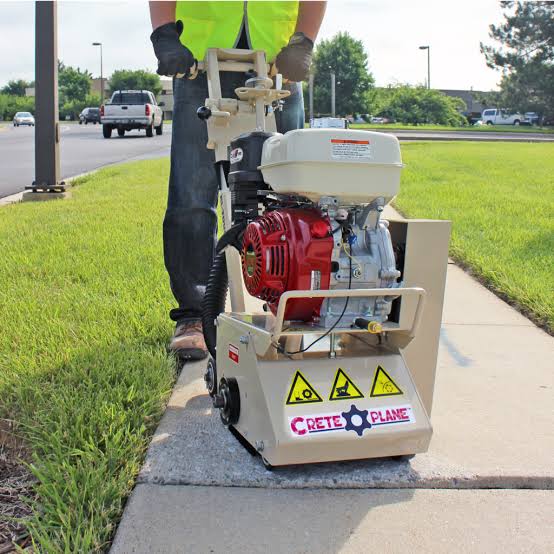
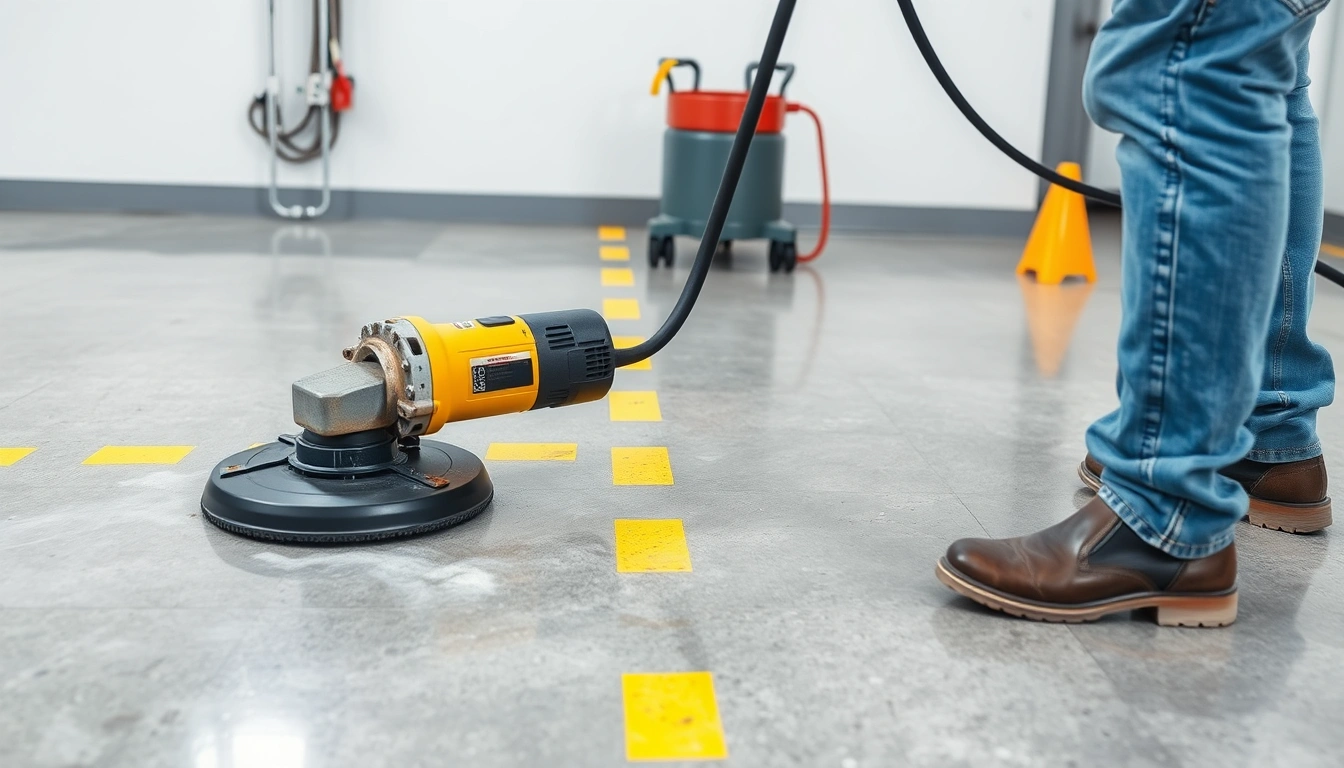
Diamond grinding wins on three criteria for the right candidate: speed, low upfront cost, and immediate return to service. For stable, isolated vertical offsets — a single joint where one panel has lifted or heaved relative to its neighbor, with solid soil beneath — industrial diamond grinding equipment removes the raised lip in hours. No cure time. No lane closure beyond the active work window. A single crew can address hundreds of linear feet across a large facility in one shift.
The equipment uses rotating diamond-segment heads to cut the concrete surface down to the adjacent slab height, producing a beveled transition that meets the floor’s existing elevation on both sides of the joint. ACI 117, the American Concrete Institute’s standard specification for concrete tolerances, provides a reference framework for acceptable surface variation — and a properly executed diamond grind brings the joint well within those tolerances. At $3–$8 per square foot, this is the most economical trip hazard fix available when the slab is genuinely stable.
Who should use diamond grinding
- Facilities with multiple isolated joint offsets that are all mechanically stable and under 1.5 inches
- Operations requiring same-day return to service — no cure window is available
- Floors where a beveled surface profile at the joint is acceptable for the mix of pedestrian and vehicle traffic
- Maintenance budgets where cost-per-square-foot is the primary constraint and the slab has been confirmed solid
Who should avoid diamond grinding (or use it only as a finishing step)
- Any location where grinding has been performed before and the offset returned within three years
- Slabs with a hollow tap sound or confirmed void beneath the settled panel
- Vertical offsets exceeding approximately 1.5 inches — removing that much concrete thins the slab edge and increases the risk of edge spalling under repetitive forklift loads
- Food-grade, pharmaceutical, or clean-room floors where surface profile specifications prohibit any change to joint geometry
Diamond grinding is a surface fix. It is the right tool for a surface problem. Applied to a structural or subgrade problem, it is the right tool used in the wrong place.
When is leveling better than grinding for trip hazards?
Polyurethane foam injection leveling beats diamond grinding in three specific situations: when the slab is actively settling, when the vertical offset exceeds 1.5 inches, and when the trip hazard covers a broad slab panel rather than an isolated joint. In each of these cases, the core issue is not the surface — it is what is missing underneath it.
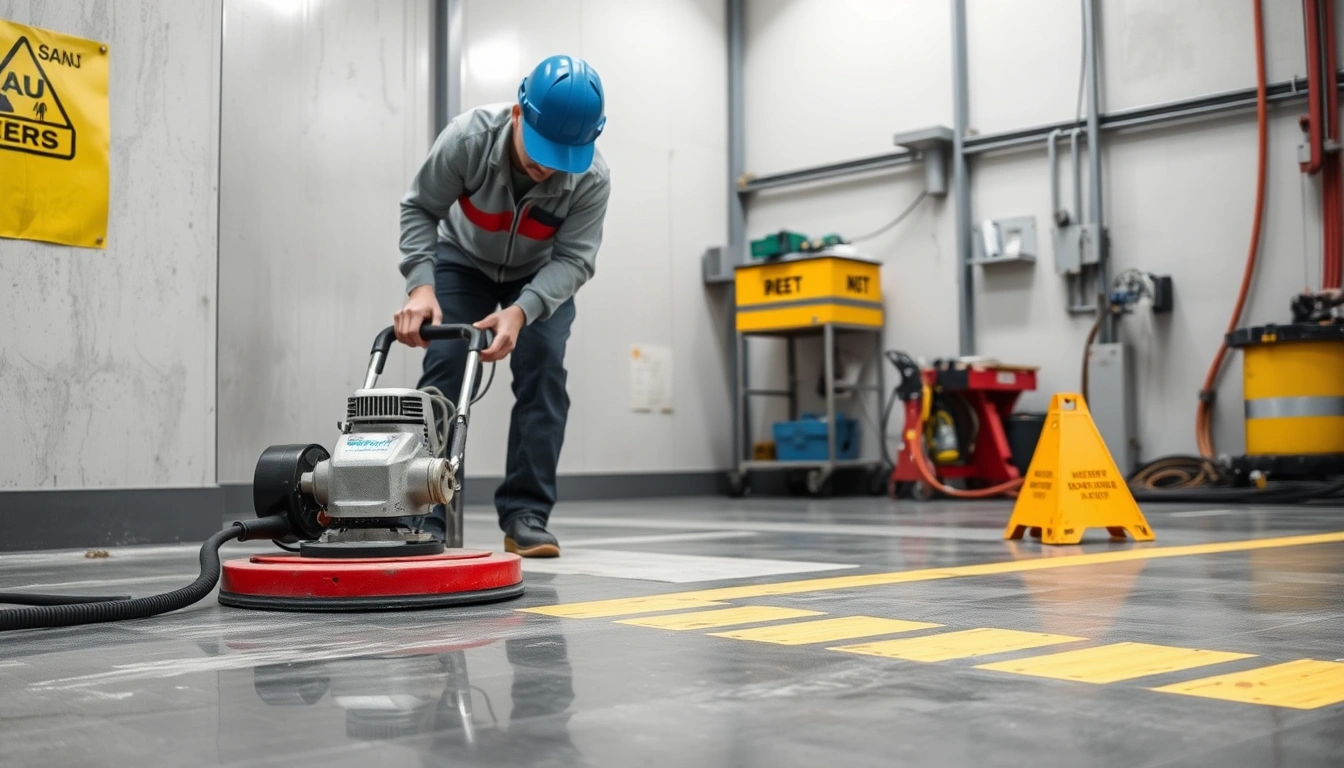
Modern polyurethane foam injection works by drilling small ports (typically 5/8-inch diameter) through the slab, injecting expanding two-part polyurethane foam into the void space beneath, and allowing the foam to fill the cavity and lift the panel back toward its original elevation. The foam cures hard in 15–30 minutes. Traffic typically resumes within an hour. Crucially, the surface is unchanged — no bevel, no material removal, no change to the floor’s drainage or joint geometry.
The cost premium is real and should be discussed honestly: $5–$25 per square foot depending on void depth, slab size, and site access. That compares unfavorably to grinding on a single-bid basis. But the math shifts significantly when you factor in recurrence rate. A $3,500 grinding job repeated twice over five years costs more in total than a $6,500 leveling job that solves the problem permanently. Contractors who present only the first-visit cost are not showing you the full picture.
When evaluating which repair method applies to your specific floor condition, understanding the relationship between surface damage and structural settlement is essential. The decision tree for industrial concrete crack repair vs leveling applies a similar diagnostic logic — surface symptoms versus subsurface causes — and often informs the same choice.
The honest head-to-head: cost, durability, and recurrence
The table below covers the criteria that actually change the decision — not theoretical features, but the factors that determine whether the repair holds, what it costs to maintain over time, and which scenarios push each method into or out of the right category.
| Criteria | Diamond Grinding | Polyurethane Foam Injection | Better for |
|---|---|---|---|
| Root cause addressed | No — surface offset only | Yes — fills void, re-supports slab | Settling slabs → Leveling |
| Typical cost per sq ft | $3–$8 | $5–$25 | Simple, stable offsets → Grinding |
| Return to service | Immediate | 30–60 minutes | Tight schedules → Grinding |
| Maximum effective offset | ~1.5 inches | 3+ inches (full panel lift) | Large offsets → Leveling |
| Surface profile change | Yes — bevel created at joint | None — original profile restored | Vehicle-heavy or spec floors → Leveling |
| Durability (stable slab) | Permanent | Permanent | Tie |
| Durability (settling slab) | 1–3 years before recurrence | Long-term if void is fully filled | Any active settlement → Leveling |
| Operational disruption | Low — dust and noise during work | Very low — small drill ports only | Both acceptable in most facilities |
| Five-year total cost (settling slab) | Higher — typically 2–3 repeat repairs | Lower — one repair that holds | Long-term value → Leveling |
Is grinding a permanent fix for uneven industrial floors?
Diamond grinding is permanent — but only when it is applied to the right problem. Grind a stable slab edge where the subgrade is solid and no void exists beneath the concrete, and that beveled surface profile will not change. No recurring maintenance, no follow-up repair. The fix is there for the life of the floor, and that is a genuinely strong outcome.
But grinding is not a permanent fix for a floor that is still settling. If the slab continues to drop after diamond grinding, the ground edge will develop a new vertical offset on the downstream side of the bevel — sometimes within 12 months, typically within 1–3 years. This is the mechanism behind most trip hazard recurrence after grinding: the surface was addressed at the joint, but the slab’s root cause — eroded subgrade, compressible fill, a broken drain line contributing to soil loss, or a failed moisture barrier — was never identified or treated.
The recurrence pattern is itself a diagnostic signal worth paying attention to. A trip hazard that returns within two years of grinding is almost certainly a settlement problem in disguise. That is not a failure of the grinding method — it is evidence that leveling was the correct intervention from the start, and the facility has now paid twice for a problem that required a different solution once.
A ground-down trip hazard on a stable slab is a permanent repair. A ground-down trip hazard on a settling slab is a subscription — expect it to recur within 1–3 years and plan accordingly.
One option that rarely appears in standard quotes is worth knowing about: the hybrid approach. For large offsets where the slab has settled significantly — too much for grinding alone — some specialized contractors will inject polyurethane foam first to lift the panel back to near-original elevation, then follow with a light diamond grinding pass to smooth any remaining surface irregularity at the joint. This sequence addresses the structural problem and the surface profile in a single mobilization, and in cases where a large offset needs both methods, it often costs less in total than two separate visits.
The verdict: choose grinding if…, leveling if…
Choose diamond grinding if the slab is structurally stable, the vertical offset is under 1.5 inches, your tap test produces a solid (not hollow) sound, and facilities staff confirm the offset has been static for at least a year. In this scenario, grinding is faster, less expensive, and genuinely permanent. It is the right tool.
Choose polyurethane foam injection leveling if the slab shows signs of ongoing settlement, if the vertical offset exceeds 1.5 inches, if the same location has been ground before and the trip hazard returned, or if your tap test suggests a void beneath the panel. The higher upfront cost is recovered through longevity. Paying once for leveling typically costs less over five years than paying twice or three times for grinding on a settling slab.
Choose neither without a structural evaluation first if the vertical offset is 3 inches or more, if the slab shows severe cracking patterns or active water infiltration, or if the floor spans a known problem area such as a post-tension zone, a utility trench, or a loading dock pit. Grinding or foam injection applied to a structurally compromised slab delays a problem that will only worsen. Any contractor who quotes either method in these conditions without flagging the structural concern is not giving you the complete picture — and you should ask directly why.
Exception scenarios where the standard verdict flips
- Budget is the binding constraint this quarter: If leveling is not funded immediately and the slab is only modestly settling, grinding buys time — with the explicit understanding that it is a bridge repair, not a solution. Document this for the capital plan and schedule the leveling evaluation before the next budget cycle.
- Food-grade, pharmaceutical, or clean-room floors: Surface profile specifications in these environments often prohibit any bevel or joint geometry change. Leveling is the only compliant option regardless of offset size or slab stability.
- Short lease or temporary facility: Grinding makes more economic sense when the building will not be occupied long enough to recover the cost premium of leveling. The calculus changes if the lease has renewal options.
- The panel has heaved upward, not settled: If one slab panel has risen due to frost heave, hydrostatic uplift, or expansive soil, foam injection does not apply — the slab is not settling, it is being pushed up. Diamond grinding or partial slab replacement addresses the surface offset; the underlying cause requires a different specialist.
- Diamond grinding addresses the surface offset; polyurethane foam injection addresses the void and settlement beneath it — the right method requires diagnosing the cause, not just the visible symptom.
- A trip hazard that returns within 1–3 years of grinding is a reliable indicator of ongoing slab settlement, not a failure of the grinding technique itself.
- Grinding costs $3–$8/sq ft with no cure time; foam injection runs $5–$25/sq ft but eliminates root-cause settlement and prevents the recurrence cycle that makes grinding expensive over time.
- The hybrid approach — foam injection first to lift the panel, then a light diamond grinding pass to smooth the joint — handles large offsets where both the structural and surface problems need addressing in one mobilization.
Common questions about industrial floor grinding vs leveling for trip hazards
What is the difference between grinding and leveling
See also: industrial floor slab repair
See also: OSHA trip hazard concrete floor threshold
See also: industrial floor safety compliance statistics
Related: Leveling industrial floor without shutting down pr