“`html
OSHA trip hazard concrete floor threshold: the exact numbers that trigger citations
⏱️ 7 min read · Last updated: 2026
- Practical enforcement threshold: 1/4 inch (6 mm) vertical offset — where inspector discretion typically begins; 1/2 inch (12 mm) and above draws near-certain citations under OSHA 1910.22
- Governing regulation: 29 CFR 1910.22(a)(3) requires that walking-working surfaces be “free of hazards such as sharp or protruding objects, loose boards, corrosion, leaks, spills, snow, and ice” — no explicit measurement is stated
- Serious violation fine: Up to approximately $16,550 per violation as of 2025–2026, adjusted annually under the Federal Civil Penalties Inflation Adjustment Improvements Act
- Willful or repeated violation: Up to approximately $165,514 per violation — and multiple offsets in one facility can each draw a separate citation
- Repair cost comparison: Diamond grinding for offsets under 3/4 inch typically runs $3–$8 per linear foot; polyurethane foam leveling for settlement-caused offsets runs $5–$25 per square foot depending on scope
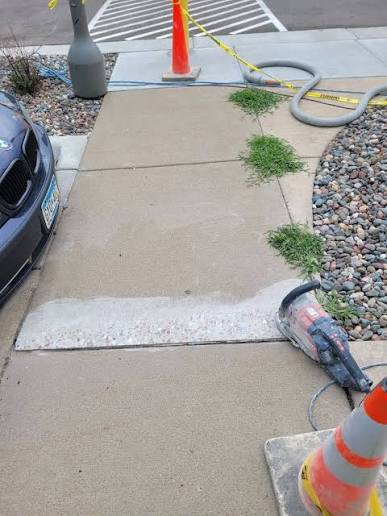
A $14,000 OSHA citation landed on a warehouse manager’s desk three weeks after a forklift operator tripped at a dock threshold. The offset that caused it: 9/16 of an inch. Not visible at a glance. Easily missed on a monthly walkthrough. The OSHA trip hazard concrete floor threshold that triggered the citation was a settling slab panel that had dropped quietly over two years — a repair that would have cost under $900 if caught at the 1/4-inch mark.
That gap between “we see it every day and nobody’s fallen yet” and “OSHA serious violation” is smaller than most facility managers realize. The real problem isn’t ignorance of the rules — it’s that the rule doesn’t give you a number. OSHA 1910.22 uses the phrase “free of hazards,” not “no offset greater than X inches,” which leaves enforcement in a gray zone that inspectors fill with judgment — and their judgment runs toward citations, not warnings.
What follows is the practical side of that gray zone: the specific thresholds that actually drive citations, the repair methods that achieve durable compliance, and the decision process that determines whether you’re looking at a $500 grinding job or a $5,000 leveling project.
What height difference counts as an OSHA trip hazard on a floor?
The practical answer is 1/4 inch — that’s the vertical offset at which OSHA inspectors commonly begin citing facilities under 29 CFR 1910.22. This isn’t written into the regulation text; it comes from decades of enforcement patterns and the measurement conventions OSHA compliance officers carry into walkthroughs.
Below 1/4 inch, most inspectors exercise discretion, particularly when the surface is in low-traffic areas or when the offset is beveled. At 3/8 inch, you’re in citation territory in most OSHA regions. At 1/2 inch or above, the documentation practically writes itself — inspectors cite, photograph, and measure without hesitation.
The 1/4-inch threshold aligns with guidance from the National Floor Safety Institute (NFSI) and mirrors the change-in-level standards used in the Americans with Disabilities Act (ADA) for accessible routes. OSHA hasn’t officially adopted these thresholds in 1910.22’s text, but inspectors know them and use them in practice.
The direction of the offset matters too. A vertical edge where one slab has dropped below the adjacent panel creates a true trip edge — the leading-foot hazard. A ramp-style transition that rises gradually over several feet is less likely to draw a citation even if the total height change is larger. OSHA inspectors are measuring sudden elevation changes, not overall grade.
Why OSHA 1910.22 doesn’t name a number — and what inspectors actually measure
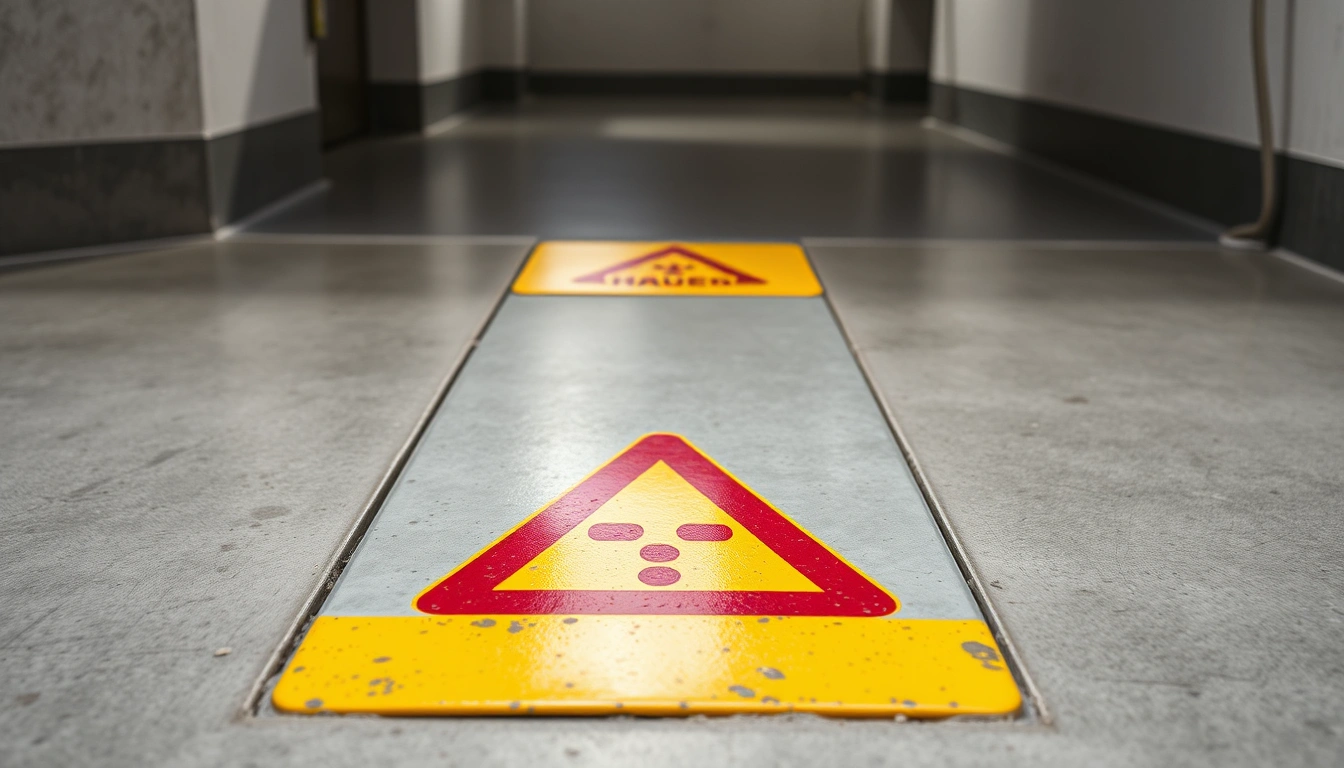
OSHA 1910.22(a)(3) states that walking-working surfaces must be “free of hazards such as sharp or protruding objects, loose boards, corrosion, leaks, spills, snow, and ice.” There is no concrete offset measurement anywhere in that language — and that’s intentional. The standard is performance-based, not specification-based.
This creates a practical compliance gap. Facility managers want a number; the regulation gives them a standard. OSHA fills that gap through the General Duty Clause (Section 5(a)(1) of the OSH Act), which requires employers to address recognized hazards even when no specific standard names an exact dimension. A slab offset that’s been measured, photographed, and identified in a prior inspection report qualifies as a “recognized hazard” — full stop.
Most facilities that receive 1910.22 citations for floor trip hazards are cited under the General Duty Clause as much as under the standard itself — meaning the absence of an explicit measurement in 1910.22 provides no protection when inspectors can demonstrate the hazard was known and ignored.
For walking surface flatness more broadly, the construction industry uses ASTM E1155 F-numbers (Floor Flatness and Floor Levelness) as design specifications. These are construction standards, not OSHA compliance metrics — a floor can meet its original F-number spec and still develop citation-level offsets as slabs settle unevenly over time. The two frameworks don’t talk to each other, which is something the industry rarely explains clearly.
Does OSHA require repairing uneven concrete in warehouses?
Yes — explicitly. Under 29 CFR 1910.22(a)(3), employers are required to maintain walking-working surfaces free of recognized hazards. An uneven concrete floor with a measurable vertical offset in a warehouse, distribution center, or manufacturing facility falls squarely under this requirement. The word “maintain” is key: it’s an ongoing obligation, not a one-time certification.
What triggers the requirement in practice is usually one of three things: an employee injury or near-miss that generates an incident report, an employee complaint filed with OSHA, or a programmed inspection targeting the SIC code for your industry. All three result in the same walkaround — and floor conditions are consistently on the inspector’s checklist.
Planned industrial floor slab repair before an inspection is always less expensive than abatement after a citation. OSHA’s abatement process requires documented correction within a specified timeframe, follow-up inspection, and written certification — all while the violation fine accrues if the deadline slips.
OSHA doesn’t mandate a specific inspection frequency for floors in 1910.22 — “periodic” is the language used. Most compliance consultants recommend monthly visual inspections and a measured audit twice per year, particularly in facilities where heavy equipment or thermal cycling accelerates slab movement.
What are the fines for floor trip hazards in a facility?
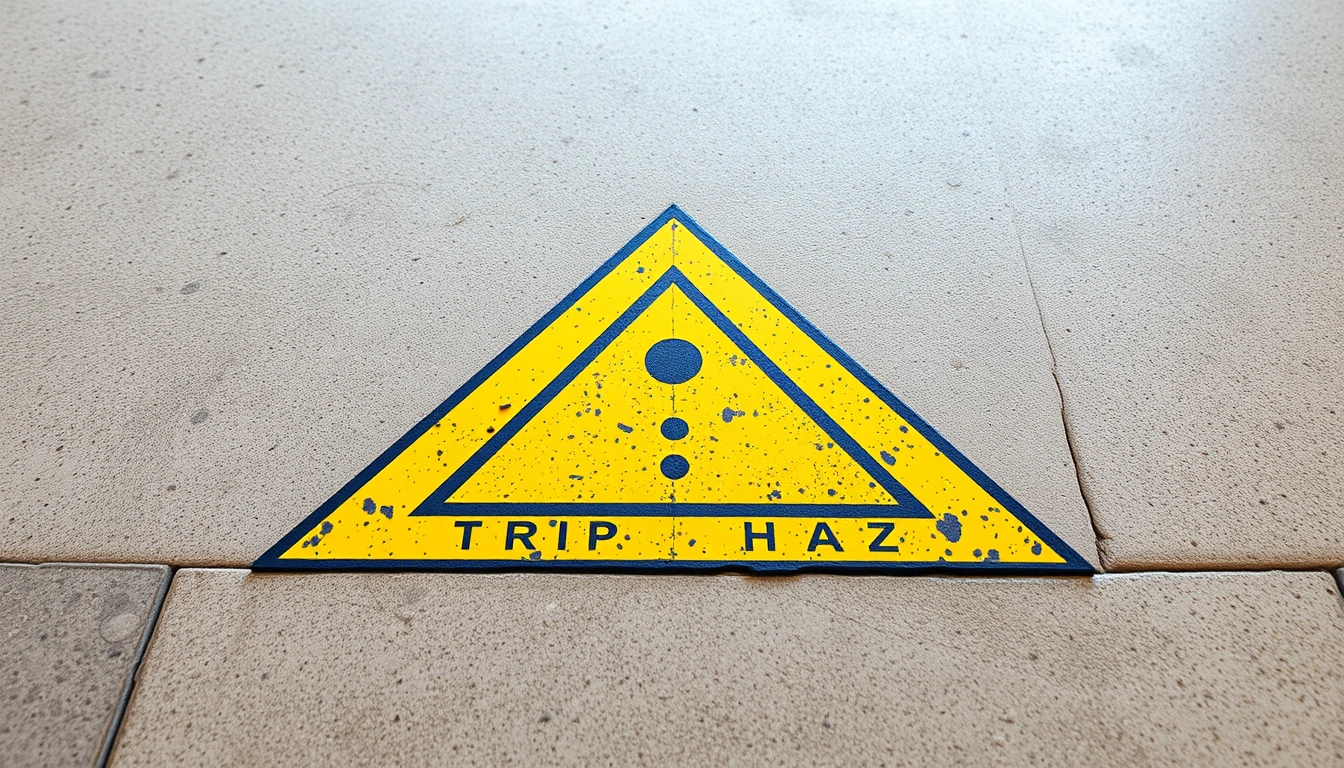
As of 2025–2026, a serious violation under OSHA 1910.22 carries a maximum penalty of approximately $16,550 per violation. A single facility walkthrough that identifies five distinct trip hazard locations — different dock thresholds, control joints, expansion joint lips — can result in five separate citations totaling more than $82,000.
Willful violations, where OSHA determines the employer knew about the hazard and failed to act, carry maximums around $165,514 per violation as of 2025–2026. These figures increase annually under the Federal Civil Penalties Inflation Adjustment Improvements Act, so the 2026 maximums will be slightly higher still. The OSHA penalty schedule is published annually and adjusted for inflation.
Failure-to-abate penalties add another layer. If OSHA cites a facility and sets a correction deadline, and the follow-up inspection finds the hazard unaddressed, daily penalties of up to $16,550 per day can accrue from the original abatement date. A two-week delay adds over $230,000 to the liability — for a hazard that might have cost $1,200 to fix.
Actual assessed penalties are typically lower than maximums. OSHA adjusts proposed penalties downward based on the size of the business, good faith, and prior citation history. A first-time serious violation at a mid-size facility with a documented safety program might settle at $4,000–$7,000. That still funds a meaningful repair project.
Grinding vs. leveling for OSHA compliance: the honest side-by-side
The right repair method depends entirely on why the offset exists — not just how large it is. Diamond grinding removes material from the high side; polyurethane foam injection or mudjacking raises the low side. Each fixes the surface measurement, but only one addresses what caused the measurement to change in the first place.
| Criteria | Diamond Grinding | Foam / Slab Leveling | Winner (condition) |
|---|---|---|---|
| Best offset range | Under 3/4 inch at joint or threshold | 1/4 inch to 3+ inches (settlement) | Leveling for settlement; grinding for wear |
| Typical cost | $3–$8 per linear foot | $5–$25 per sq ft of slab raised | Grinding (for small, localized offsets) |
| Downtime | 1–4 hours per work area | 2–6 hours; walkable same day | Roughly equal |
| Addresses root cause | No — removes material from high side only | Yes — stabilizes void beneath settled slab | Leveling (when settlement is the cause) |
| Risk of recurrence | Low if offset is wear-based; high if settlement continues | Low once foam fully cures and void is filled | Leveling (for settlement-origin offsets) |
| Slab thickness impact | Reduces slab thickness — critical above 1 inch removal | No removal; preserves full slab depth | Leveling (structural preservation) |
| OSHA compliance outcome | Immediate, measurable, documentable | Immediate, measurable, documentable | Tie — both achieve compliance |
| Best facility type | Dock thresholds, control joint lips, wear-pattern bumps | Warehouse floors, loading bays, settled aisle panels | Context-dependent |
The deciding question: did the slab settle downward, or did the surface wear and chip upward? If a panel has dropped — you can see daylight or feel the void when you tap the slab — grinding the adjacent panel down creates compliance today but a larger offset in six months as settlement continues. Raising the dropped panel with foam stops the cycle.
For a detailed look at method-by-method cost and performance data, the industrial concrete leveling statistics break down outcomes by facility type, offset range, and repair method. The numbers make the grinding-vs-leveling decision clearer than most contractor consultations do.
The verdict: Choose diamond grinding when the offset is under 3/4 inch, the cause is surface wear (not settlement), and you need the area back in service the same day for under $1,000. Choose foam leveling when the slab has dropped, when the offset exceeds 3/4 inch, or when you’ve already ground the same joint twice. Neither if the slab has structural cracking, spalling, or delamination deeper than 1 inch — at that point, you’re weighing when to level vs replace industrial concrete slab.
How OSHA inspectors actually find concrete floor offsets during a walkthrough
OSHA compliance officers don’t walk in with a laser level and measure every joint. They walk the facility the way an employee does — which is exactly why settlement-caused offsets at dock thresholds and aisle intersections get caught. Inspectors travel the same routes workers travel, at roughly the same pace, looking for what catches their attention.
What catches attention: a visible height differential at a control joint, a scuff or darkened patch of floor where foot traffic has worn around an obstacle, forklift tire marks that veer around something the driver has learned to avoid. That last one is a consistent find — when equipment operators are navigating around a floor feature, it’s a documented informal recognition of a hazard, and inspectors know to look for it.
After the visual walkthrough, inspectors typically request the facility’s injury and near-miss logs. A log entry mentioning a “stumble,” “uneven surface,” or “floor condition” at a specific location becomes the paper trail that upgrades a citation from serious to willful if the offset is still there at the time of inspection.
Measurements happen after identification, not before. An inspector who spots a potential offset will pull a tape or a digital depth gauge. Anything at or above 1/4 inch gets documented; anything at or above 1/2 inch is almost certainly cited. The measurement is the evidence, not the discovery method.
When the offset is a symptom, not just a surface problem
A concrete floor offset that grew from 1/8 inch to 3/8 inch over 18 months is not a grinding problem — it’s a settlement problem wearing a grinding problem’s clothes. Addressing it by removing material from the high side achieves OSHA compliance for now and guarantees a recurrence citation later. This is the scenario that generates the most expensive repair histories.
Settlement in industrial floors typically comes from one of three sources: void development beneath the slab due to water migration or soil erosion, point-load damage from heavy equipment operating repeatedly in the same zone, or subbase failure in areas with high thermal cycling. Each has a different repair approach, and none of them respond well to surface grinding alone.
Comparing options at the method level — rather than just the price level — is where most facilities make better decisions. A useful framework for this is the industrial concrete leveling comparison, which maps method to cause-type and facility conditions rather than treating all offsets as equivalent surface problems.
The diagnostic step most facilities skip: after identifying an offset, tap the slab on both sides of the joint with a rubber mallet. A hollow sound on one side means there’s a void — settlement is ongoing. A solid sound on both sides means the slab is stable and grinding is a reasonable fix. That 30-second test changes the repair decision and, in most cases, the budget conversation.
- The OSHA 1910.22 enforcement threshold for floor offsets is 1/4 inch in practice — the regulation uses “free of hazards” language, but inspectors carry a number
- A single serious trip hazard citation runs up to ~$16,550; five offsets in one facility walkthrough can exceed $82,000 in proposed penalties as of 2026
- Choose diamond grinding for wear-based offsets under 3/4 inch; choose foam leveling when the slab has settled — grinding a settlement offset achieves compliance today and a recurrence citation within 18 months
- Tap-test both sides of the offset before choosing a repair method — a hollow sound means void, and void means leveling, not grinding
Common questions about OSHA trip hazard concrete floor threshold
What is the OSHA trip hazard height limit for concrete floors in industrial facilities?
OSHA 1910.22 does not state an explicit measurement, but enforcement practice consistently treats 1/4 inch (6 mm) as the threshold where inspectors begin citing facilities. Offsets at or above 1/2 inch are near-certain citations. The General Duty Clause allows citation of any recognized hazard regardless of measurement.
How do I bring a warehouse floor into OSHA compliance when there are multiple uneven sections?
Start with a measured audit: walk every aisle and dock threshold, measure all offsets above 1/8 inch, and categorize by cause (wear vs. settlement). Grind offsets under 3/4 inch with a wear-based cause. Use foam leveling for settled panels. Document each repair with before-and-after measurements. OSHA inspectors expect a repair log, not just a fixed floor.
How much are OSHA fines for uneven industrial floors in 2026?
Serious violations under OSHA 1910.22 carry maximum fines of approximately $16,550 per violation as of 2025–2026, adjusted annually for inflation. Willful or repeated violations reach approximately $165,514 per violation. Multiple hazard locations in one facility can each generate a separate citation — five offsets could result in over $82,000 in proposed penalties.
Why did my facility get cited for floor trip hazards when we’ve never had an injury?
OSHA 1910.22 citations do not require an injury — only a recognized hazard. Inspectors can cite a measurable offset discovered during a programmed inspection, a complaint investigation, or a routine audit. An absence of injury history does not reduce the citation; it can, however, reduce the proposed penalty if your safety records are documented and in order.
Is diamond grinding or concrete leveling better for achieving OSHA floor compliance?
Both achieve compliance immediately — the right choice depends on cause, not preference. Grinding works for offsets under 3/4 inch caused by surface wear. Leveling is correct when a slab panel has settled downward, because grinding a settling slab achieves compliance today and a larger offset within 12–18 months as settlement continues.
Does OSHA 1910.22 apply to warehouse floors, or only to certain industries?
OSHA 1910.22 is a General Industry standard that applies to all employers covered under 29 CFR Part 1910, including warehouses, distribution centers, manufacturing plants, and retail stockrooms. It does not apply to construction worksites, which fall under 29 CFR Part 1926. If employees walk it at work, 1910.22 almost certainly covers the surface.
How often should industrial floors be inspected for OSHA trip hazard compliance?
OSHA 1910.22 uses the word “maintained” but does not specify a mandatory inspection interval. Most compliance consultants recommend monthly visual walkthroughs and a twice-yearly measured audit with a tape or digital depth gauge. Facilities with heavy forklift traffic, thermal cycling, or aging concrete should inspect high-traffic aisle joints quarterly at minimum.
The bottom line
The OSHA trip hazard concrete floor threshold is 1/4 inch in practice — below that, inspectors exercise discretion; above 1/2 inch, citations are nearly automatic. The more important number is the cost: a $900 repair completed before an inspection versus an $82,000 penalty exposure after one. Those aren’t hypothetical figures — they’re the math behind decisions that facility managers make (or avoid making) every quarter in 2026.
The single most actionable step you can take this week: walk your facility’s three highest-traffic routes with a tape measure and check every control joint, dock threshold, and aisle intersection. Measure anything that catches your toe. Anything at or above 1/4 inch goes on a repair priority list. Anything at or above 1/2 inch gets a contractor call this month.
For a fuller picture of the compliance landscape — cracks, settlement, structural concerns, and the repair options available — the guide on Industrial Floor Slab Repair & Compliance: Safety, Cracks, and Trip Hazards covers the decision framework from initial audit through repair verification.
“`
See also: industrial floor slab repair
See also: industrial concrete leveling
See also: industrial concrete leveling statistics
Related: industrial concrete crack repair vs leveling
Related: settlement inspection
Related: industrial floor safety compliance statistics