“`html
Leveling Industrial Floor Without Shutting Down Production: Phased Methods, Costs & Scheduling
⏱️ 6 min read · Last updated: 2026
Leveling industrial floor without shutting down production is possible when you use phased scheduling to treat one zone at a time during off-shifts. Crews inject polyurethane foam that cures in 15–30 minutes, so each zone is back in service fast. Most teams finish 2–3 sections per overnight shift while production continues in untreated areas. This avoids the $1 million-plus loss a mid-size plant faces during a full-week shutdown.
- Polyurethane foam injection returns each treated zone to service in 15–30 minutes, compared to 24–72 hours for traditional mudjacking.
- Off-shift scheduling carries a 15–25% cost premium over standard business-hours work.
- A trained crew levels 2–3 sections per 10-hour off-shift, depending on slab thickness and void severity.
- Total downtime per zone is 2–4 hours of active work, with the floor operational again within 30 minutes of completion.
- Phased scheduling across a large facility spans 2–6 weeks, versus 1–2 weeks for a full-shutdown approach.
Can concrete leveling be done without stopping our production line?
Yes — and for most active facilities in 2026, it is the recommended approach. The contractor treats the project as rolling work: crews isolate one section, inject polyurethane foam through small drill holes, patch the holes, and hand the zone back before the next shift starts. Production continues everywhere else.
This method works because polyurethane foam injection needs only a small footprint per zone. A crew requires roughly a 10-by-10-foot staging area, a few access holes, and a clear path to the injection rig. The forklift lanes and workstations two zones over keep running without interruption.
The Bureau of Labor Statistics estimates that unplanned downtime costs U.S. manufacturers over $50 billion per year. Much of that loss comes from facilities that treated floor leveling as an all-or-nothing event — shutting everything down when a phased approach would have kept most operations active. With that context in mind, let’s look at how phased scheduling works.
How phased scheduling changes the math entirely
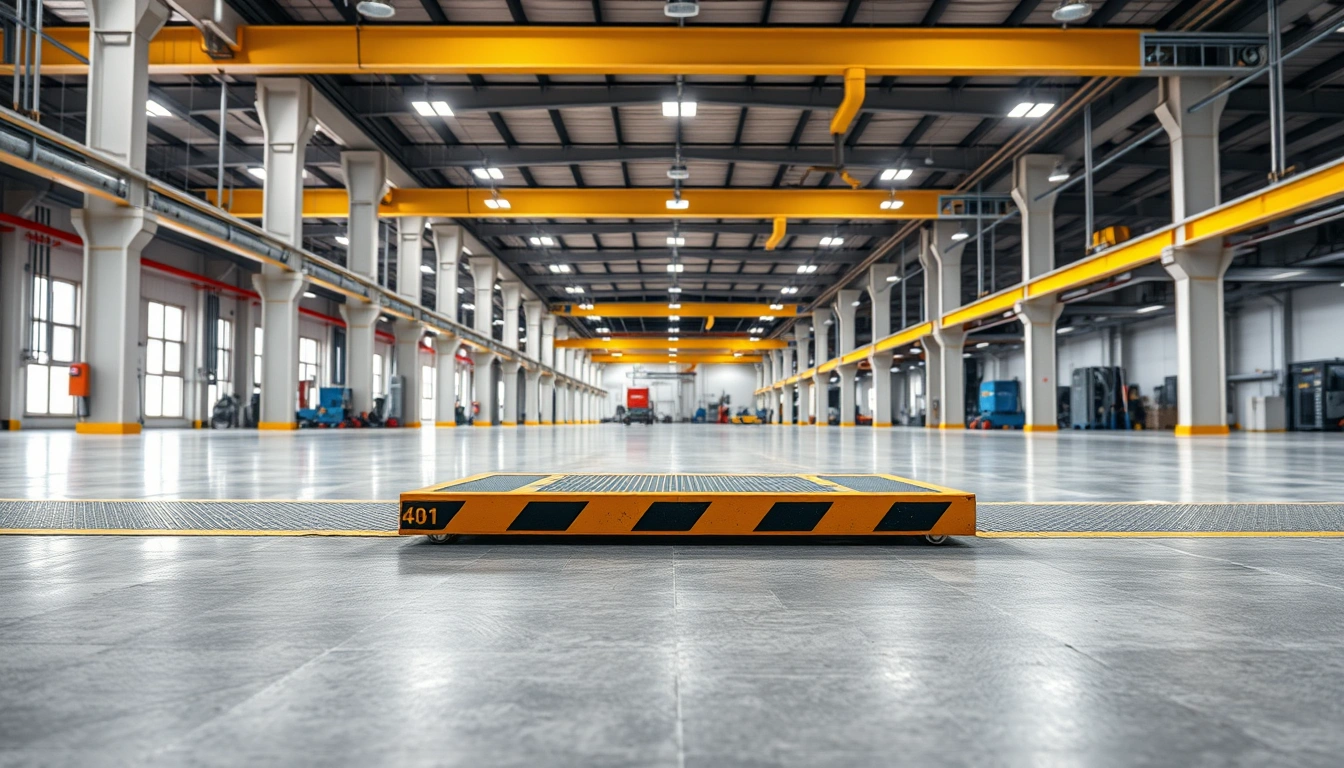
Instead of clearing the entire floor for a week, you divide the facility into 4–8 zones — typically by production line, bay, or traffic corridor — and level one zone at a time. Each zone is a self-contained project with its own timeline, downtime window, and return-to-service schedule.
While Zone 3 is being leveled on Tuesday night, Zones 1 and 2 are already back in service carrying full production loads. By the time the crew reaches the final zone, the first ones have been operational for weeks. This is why leveling industrial floor without shutting down production drops total facility impact from 100% to roughly 15–25% across the project timeline.
Looking at contractor-reported data from 2025, facilities using phased scheduling reported 60–70% less total production loss compared to those that chose a full shutdown approach.
The real cost of off-shift floor leveling
Off-shift work — evenings, nights, weekends — costs 15–25% more than standard business-hours scheduling. That premium covers overtime labor, after-hours project management, and the added coordination required when supervisors are not on-site during the work.
For a typical polyurethane foam injection cost of $3–$6 per square foot, the off-shift premium adds roughly $0.50–$1.50 per square foot. A 500-square-foot zone costs an extra $250–$750. That sounds significant until you compare it to lost production.
A plant running $45,000 per hour loses $180,000 in just four hours of daytime downtime. Suddenly, the off-shift premium looks like the best money you ever spent on leveling your industrial floor without shutting down production.
The math is straightforward: if your hourly production value exceeds roughly $2,000, paying a 20% after-hours premium to level floors overnight will always be cheaper than taking the same downtime during operating hours.
Weekend scheduling carries a 20–30% premium due to reduced crew availability. However, a weekend approach can complete 4–6 zones in two days, compressing the overall timeline significantly.
How do contractors level plant floors during off-shifts?
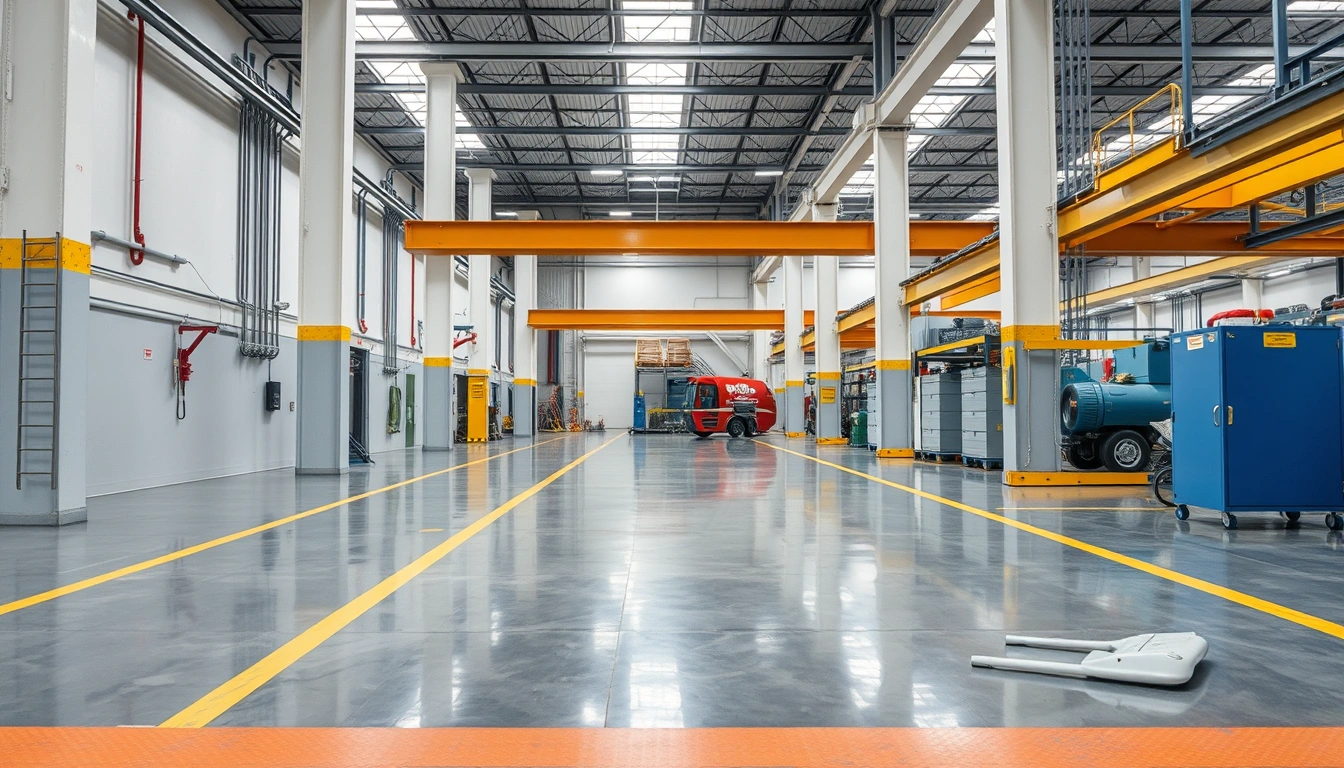
A crew arrives 30 minutes before the shift change to set up staging and cordon off the work zone with barriers and signage. OSHA requires clear marking of construction zones in active facilities. Most experienced contractors bring their own barricade systems.
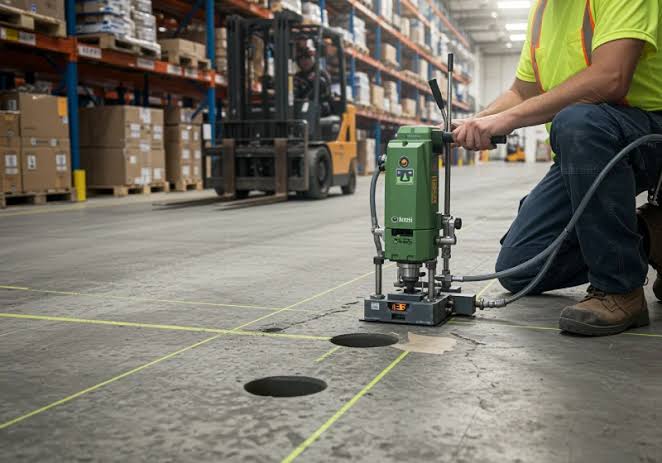
The actual injection takes 1–2 hours per section. Crews drill 5/8-inch holes through the slab at calculated intervals, inject expanding polyurethane foam to fill voids and lift the slab, and track elevation changes with a laser-guided monitor. Accuracy lands within 1/8 inch of the target.
After injection, the crew patches drill holes with rapid-set cement and runs a final level check. The zone clears for foot traffic within 15–30 minutes. Forklift traffic can resume in 1–2 hours. In a 10-hour overnight shift, a three-person crew completes 2–3 zones of 200–400 square feet each.
Coordination is the piece most projects underestimate. The contractor needs a designated site contact who grants access, confirms zone clearance, and authorizes return to service each shift. Without that single point of contact, crews lose 30–60 minutes per night to logistics delays.
Phased leveling vs. full shutdown: the honest side-by-side
Both approaches produce the same physical result — a level, stable concrete floor. The differences are entirely in how they affect your operations and your budget.
| Criteria | Phased section-by-section | Full shutdown | Winner for |
|---|---|---|---|
| Total production lost | 8–16 hours spread across weeks | 40–80 hours in one block | Phased |
| Cost premium over standard | 15–25% for off-shift labor | Standard pricing | Shutdown |
| Calendar timeline | 2–6 weeks | 1–2 weeks | Shutdown |
| Return to service per zone | 15–30 minutes | 24–48 hours full cure | Phased |
| Scheduling complexity | High — weekly coordination needed | Low — one planning cycle | Shutdown |
| Best facility type | 24/7 operations, high output | Seasonal lulls, low-output periods | Depends |
The bigger picture in industrial concrete leveling is not the injection method — it is the scheduling strategy. Phased leveling wins on production preservation but costs more in project management. Full shutdown wins on simplicity and speed but sacrifices significant output.
For facilities producing over $10,000 in hourly output, phased scheduling almost always comes out ahead financially. For smaller operations or those with natural seasonal shutdowns, the full-shutdown approach is more practical and cheaper.
When is a full shutdown actually the smarter call?
Phased scheduling is not always the right answer for leveling an industrial floor. Three scenarios produce better outcomes with a full shutdown.
Scenario 1: You have a planned shutdown window. Many facilities have annual maintenance periods where production drops to 10–20% of normal output. Scheduling leveling during that window eliminates the off-shift premium and compresses the project to 1–2 weeks.
Scenario 2: Problems are concentrated in one area. If 80% of your settling issues affect a single bay covering less than 30% of total floor space, a targeted shutdown in that zone is often faster and cheaper than coordinating phased off-shift work.
Scenario 3: Safety constraints block active-site work. Facilities with heavy overhead cranes, chemical processes, or extremely narrow aisles may create unacceptable risks when construction runs alongside active operations. The American Concrete Institute and OSHA guidelines emphasize that construction zones must be clearly separated from traffic. In tight facilities, that separation may be impossible without a full shutdown.
Common questions about leveling industrial floor without shutting down production
What is phased concrete leveling?
Phased concrete leveling divides a facility floor into zones and treats each zone individually during off-shifts or planned production gaps. Each section returns to service within 15–30 minutes using polyurethane foam injection. Total project timelines typically span 2–6 weeks, with cumulative production impact limited to 15–25%.
How much extra does after-hours industrial leveling cost?
After-hours industrial leveling costs 15–25% more than standard business-hours work. For polyurethane foam injection at $3–$6 per square foot, that translates to roughly $0.50–$1.50 per square foot in premium charges. A typical 500-square-foot zone adds $250–$750 in off-shift costs — a fraction of the production value preserved by avoiding daytime downtime.
When should I choose a full shutdown instead of phased leveling?
Choose a full shutdown when you have a planned maintenance window of 5+ days, when problems are concentrated in less than 30% of your floor space, or when safety constraints prevent active-site work. The American Concrete Institute recommends evaluating industrial slabs annually for deflection exceeding 1/4 inch to catch issues before they require emergency shutdowns.
The bottom line
Choose phased section-by-section leveling if your facility runs 24/7 and hourly production output exceeds $10,000. Choose a full shutdown if you have a planned maintenance window of 5+ days or if the affected area covers less than 30% of your total floor space. Neither approach works if your facility has no physical room to isolate work zones — address layout constraints before scheduling any work.
Start by walking your facility floor this week. Identify the worst sections — the spots where forklifts bounce, where workers have stumbled, and where water pools instead of draining. Then call two contractors who specifically advertise phased or off-shift services and ask for a per-zone quote with a written phased schedule. The contrast between those two quotes will tell you more than any article.
“`
See also: industrial concrete leveling
See also: industrial floor slab repair
See also: industrial floor grinding vs leveling for trip haz