Cold storage warehouse floor settlement repair: what actually works (and what fails in a freezer)
⏱️ 12 min read · Last updated: 2026
Cold storage warehouse floor settlement repair is usually solved by polyurethane foam injection, but only when the slab is warmed enough for the material to cure and the cause of movement is fixed at the same time. In freezer warehouses, the problem is usually frost heave caused by failed sub-slab heating, a damaged vapor barrier, or both. If you only lift the slab and do not stop the freeze-thaw cycle, the floor will move again. This guide explains how the repair works, what causes failure, what it costs in 2026, and how to review contractor proposals.
- Frost heave displacement in commercial cold storage facilities commonly ranges from 1 to 3 inches; in severe cases with prolonged sub-zero soil exposure, displacement can reach 4 to 6 inches.
- Polyurethane foam injection requires a minimum substrate and ambient temperature of 40°F to cure predictably — below 35°F, the chemical reaction slows and void-fill becomes unreliable.
- Sub-slab heating systems in refrigerated warehouses are typically designed to maintain 38°F to 40°F at the soil-slab interface to prevent frost penetration.
- Polyurethane foam repair downtime: commonly 4 to 8 hours per zone including thermal conditioning, vs. 2 to 5 days for slab-section replacement.
- Cold storage floor leveling with polyurethane foam typically costs $5 to $15 per square foot in 2026; full slab replacement in a freezer environment commonly runs $25 to $50 per square foot or more due to thermal disruption and controlled-access requirements.
Why do freezer warehouse floors heave and settle?
Freezer warehouse floors heave and settle because water in the sub-base soil freezes and expands roughly 9% when sub-slab heating fails or is undersized. Soil temperatures at the slab base drop below 32°F, the water in that soil turns to ice, and the concrete lifts. When the ice thaws — during defrost cycles, system shutdowns, or seasonal warming — the slab drops back, often unevenly because the freeze front moves non-uniformly.
This is frost heave, and it drives the majority of cold storage floor settlement cases. Unlike ordinary slab settlement from soil consolidation, frost heave is cyclical. The floor moves with operating conditions and seasons, which is why surface repairs that ignore the freeze-thaw driver fail predictably.
Warm, humid outside air can also migrate toward the cold storage space. When the vapor barrier beneath the slab is compromised, moisture accumulates in the sub-base and freezes. Over time, small cracks can become larger displacement issues within just a few operating seasons.
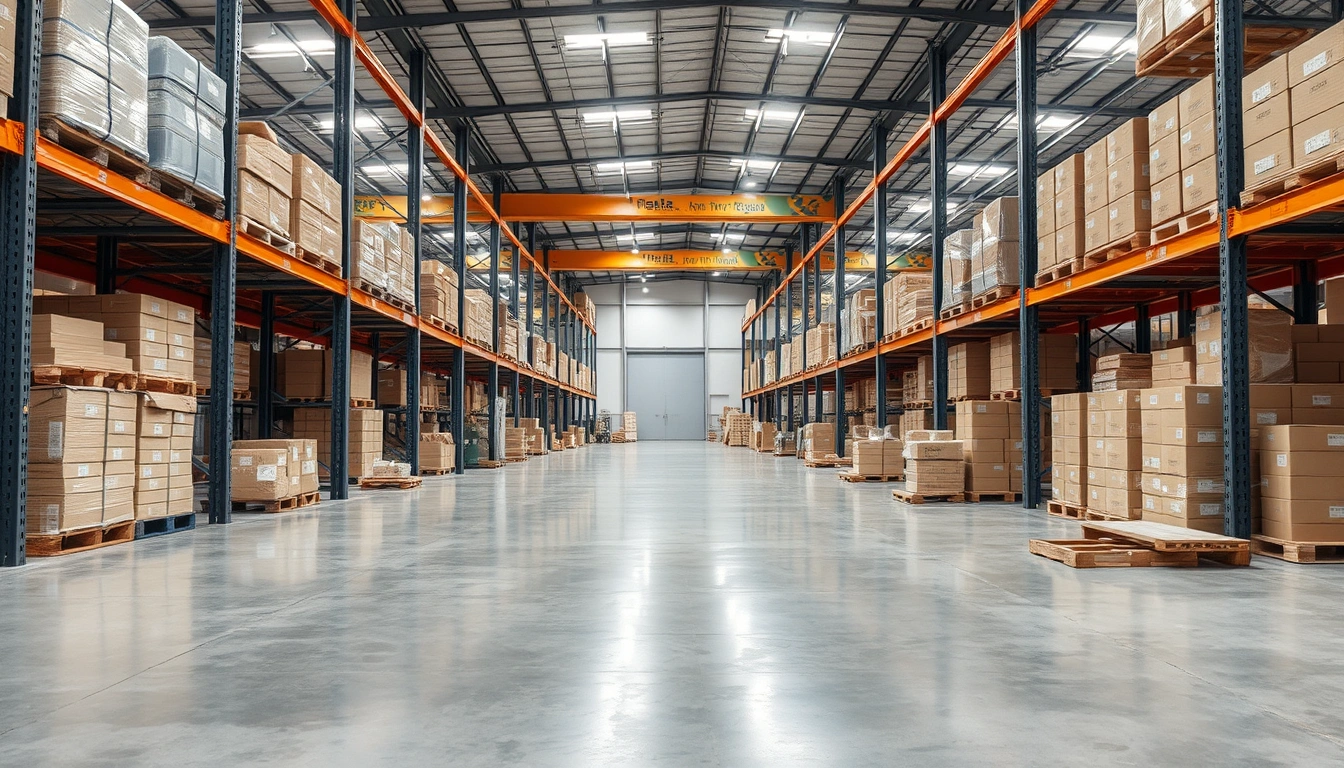
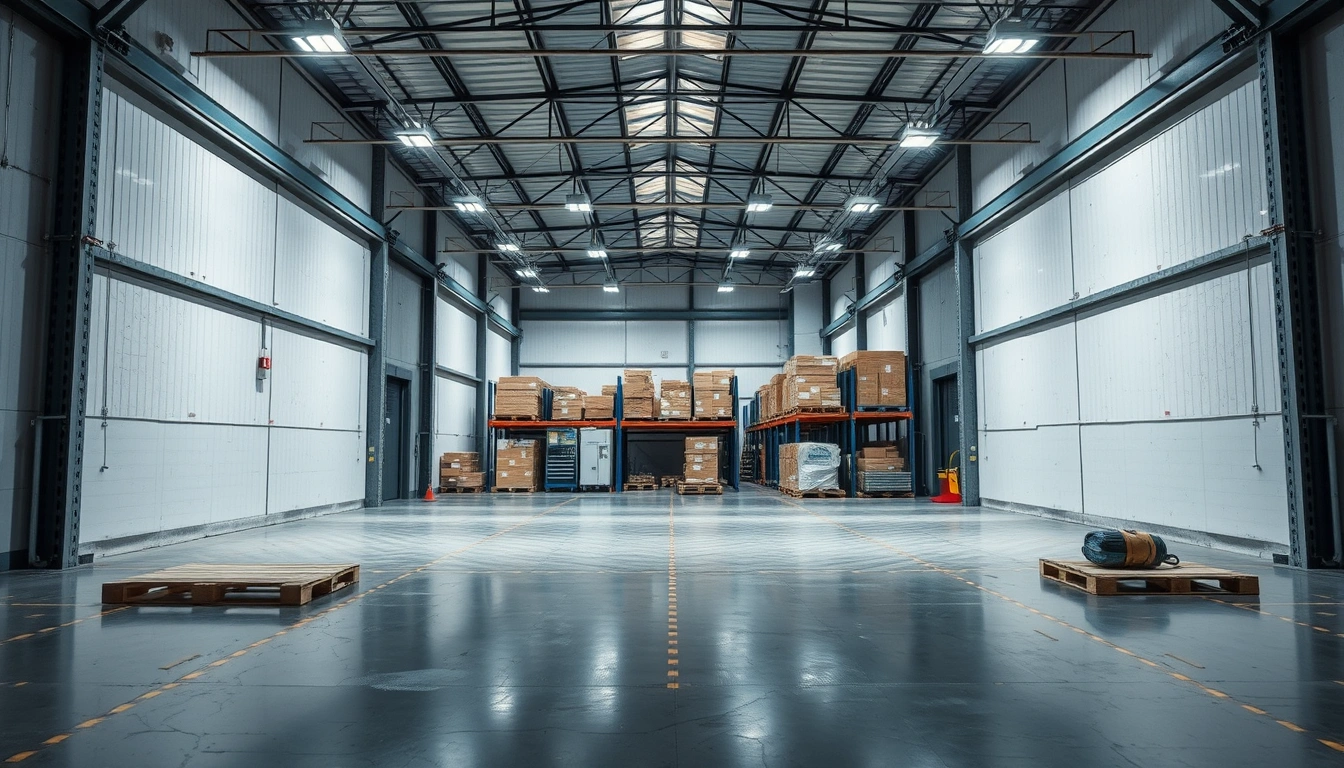
In commercial cold storage facilities, frost heave displacement commonly ranges from 1 to 3 inches — enough to create active forklift hazards, destabilize racking systems, and violate the floor flatness tolerances required for most refrigerated warehouse operations.
As adjacent slab panels lift and drop independently, control joint failure permits vertical differential movement between panels. This accelerates edge spalling and creates progressive trip hazards.
How do you level a settled cold storage warehouse floor?
Level a settled cold storage warehouse floor with polyurethane foam injection performed after the repair zone reaches at least 40°F at both slab surface and substrate. This process differs from standard commercial leveling in two critical ways: thermal pre-conditioning and a root-cause investigation running alongside the injection work.
The correct sequence:
- Conduct a thermal survey. Use an infrared thermometer to map substrate temperatures across the repair zone. Surface readings understate soil temperature by 5 to 10 degrees — get actual substrate readings.
- Restore sub-slab heating. Confirm the system maintains target temperature, or deploy portable electric radiant heaters for 12 to 24 hours. Target: substrate above 40°F, ideally 45 to 50°F.
- Mark the injection port grid. Lay out ports on 4- to 6-foot spacing, adjusted for slab boundaries, drain locations, and racking anchors.
- Drill injection ports. Use a 5/8-inch rotary hammer bit through full slab depth. Cold bits bind easily in dense concrete — keep spare bits warm and use insulated gloves.
- Inject in lifts. Use closed-cell, two-component polyurethane foam rated for low-temperature substrate conditions. Cycle through the port grid in small lifts — no more than 1/8 inch per pass per port.
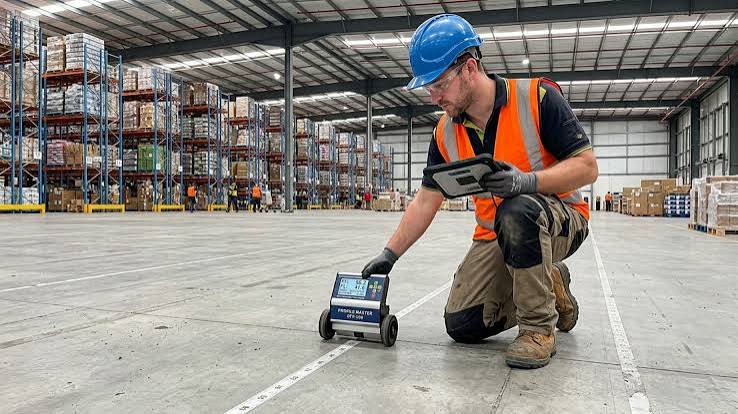
- Monitor slab elevation continuously. Set laser level targets before the first injection. Read between every cycle. Know your warehouse floor flatness spec before the first port is drilled — refrigerated facilities typically require FF 35 to 50 and FL 25 to 35.
- Seal ports and trim foam. After the foam cures (typically 15 to 30 minutes at properly conditioned temperatures), trim protruding foam flush and seal each port with cold-rated cementitious grout or epoxy mortar. Standard Portland cement grout cures too slowly under residual cold.
- Inspect the vapor barrier perimeter and document post-repair elevations. Probe for vapor barrier damage using a moisture meter. Record a full grid of post-repair elevations. Schedule a 60-day follow-up — slabs that experienced significant frost heave may settle slightly as the sub-base reaches thermal equilibrium.
Can concrete leveling be done in a freezer environment?
Yes — concrete leveling can be done in a freezer environment, but only with polyurethane foam injection and only after the repair zone is thermally conditioned above 40°F. Most standard leveling contractors cause failures by using equipment calibrated for 60 to 70°F job sites directly on a 10°F freezer floor. The chemistry does not cooperate, and the repair fails quietly — often months later when the settled slab returns.
Polyurethane foam is the only practical leveling material for active cold storage. Products like PolyLevel, used by licensed Foundation Supportworks dealers, publish technical data sheets confirming minimum application temperatures. Any foam product intended for cold storage work should specify 40°F or below. If it reads 50°F or higher, it is not appropriate regardless of price.
For industrial concrete crack repair vs leveling, the decision is clear: if the slab has moved from its original elevation, leveling must precede or accompany crack repair. Sealing cracks on a slab that is still settling wastes materials and effort.
| Method | Works in cold storage? | Temp requirement | Typical downtime | Key limitation |
|---|---|---|---|---|
| Polyurethane foam injection | Yes — with pre-conditioning | 40°F minimum at substrate | 4–8 hours per zone | Requires thermal conditioning step; material-specific temp rating applies |
| Mudjacking (cementitious slurry) | No — not recommended | Not suitable | N/A | Water-based slurry freezes before curing; adds dead load without reliable support |
| Concrete slab replacement | Yes — with full facility shutdown | 50°F+ required for concrete cure | 2–5 days minimum | Thermal disruption is costly; reserved for catastrophic displacement or slab failure |
| Self-leveling cementitious overlay | Limited — surface only | 50°F+ required | 24–48 hours per lift | Addresses surface irregularity only; does not fill sub-slab voids or correct elevation |
The vapor barrier failure most repair crews miss
A compromised vapor barrier beneath the cold storage slab is one of the most common root causes of ongoing settlement — and one of the most consistently overlooked during repair scoping. The barrier (typically 10- to 20-mil polyethylene membrane installed during construction) prevents moisture migration from soil into the sub-base. When it tears, punctures, or degrades past its service life, moisture accumulates directly below the slab and freezes during normal operations.
Facilities that experience floor movement primarily during or immediately after defrost cycles almost always have a vapor barrier problem. Common failure causes include conduit or drain penetrations that were never sealed, mechanical damage from forklift stress transmission, age-related degradation (pre-2000 construction commonly used thinner 6-mil poly), and settlement-induced cracking that extends through the membrane.
A repair contractor who drills injection ports without checking the vapor barrier condition below leaves the root problem intact. When ports are drilled, probe the perimeter with a moisture meter and look for standing water or ice crystals in the void space. Both signal a breached membrane.
Sub-slab heating: the fix that stops the settlement cycle
Sub-slab heating prevents frost heave from occurring in the first place. Completing a cold storage floor repair without addressing sub-slab heating status is like fixing a leak by mopping the floor. The heating system (electric resistance cables or a glycol-based hydronic loop embedded in the sub-base) maintains the soil-slab interface above freezing and prevents the freeze-thaw cycle that drives settlement.
In standard cold storage design, sub-slab heating maintains 38°F to 40°F at the slab base under worst-case conditions. According to ASHRAE guidance, heating capacity must account for the facility’s thermal load, floor assembly insulation R-value, and local climate data. A system sized for -10°F operations may be critically undersized if the facility upgrades to -20°F or -30°F storage.
Sub-slab heating failures that cause floor settlement fall into three categories:
- Outright system failure: A failed heating element, pump, or control circuit that goes undetected — sometimes for months — until the slab begins to move.
- Capacity mismatch: The original system was adequate for initial operating temperatures but was never upgraded when storage conditions changed.
- Perimeter insulation degradation: Edge insulation has compressed, delaminated, or absorbed moisture. The perimeter is always the coldest zone — and where frost heave initiates before spreading inward.
Before any industrial floor slab repair in a cold storage environment, confirm the sub-slab heating system status with a mechanical contractor. Foam-injected concrete over unheated, frost-susceptible soil will resettle on the next cold cycle.
What correct cold storage floor repair looks like — vs. what doesn’t
Evaluate a cold storage floor repair proposal by what is in the scope — specifically whether it addresses the full system failure or only the surface symptom. The table below shows what separates durable repairs from warranty calls.
| Scope element | Correct approach | Red flag |
|---|---|---|
| Thermal pre-conditioning | Substrate temperature verified at 40°F+ before any injection begins | No temperature check; injection into an active freezer environment |
| Root-cause assessment | Sub-slab heating status and vapor barrier condition evaluated before scoping | Scope limited to drilling and injection only; no system review |
| Lift monitoring | Laser level targets monitored continuously; injection stopped at design grade | Visual estimation or no continuous monitoring during injection |
| Material specification | Closed-cell polyurethane foam with a documented minimum application temp of 40°F or below | Standard commercial foam with 50°F+ application requirement; any mudjacking slurry |
| Post-repair documentation | Full elevation grid recorded post-repair; 60-day follow-up inspection scheduled | No post-repair survey; no follow-up protocol |
| Flatness tolerance verification | Post-repair elevations checked against FF/FL spec; any remaining differential above 1/4 inch flagged | No tolerance check; “looks level” accepted as the standard |
Any remaining differential above 1/4 inch between adjacent slab panels is a forklift hazard and a likely code compliance issue. ACI 117 tolerance standards apply inside refrigerated facilities, and automated storage and retrieval systems (AS/RS) operate under tighter tolerances still.
A properly executed cold storage floor repair with polyurethane foam injection typically costs $5 to $15 per square foot in 2026 and completes in a single shift — compared to $25 to $50 per square foot for slab replacement requiring two to five days of thermal disruption and facility downtime.
Repair timeline and cost breakdown for 2026
Cold storage warehouse floor settlement repair costs $5 to $15 per square foot for polyurethane foam injection in 2026. Full slab replacement in a freezer environment runs $25 to $50 per square foot or more due to thermal disruption and controlled-access requirements. A single-zone foam repair in a 2,000-square-foot area commonly takes one to two days including pre-conditioning.
Each timeline stage:
- Site assessment and thermal survey: 2 to 4 hours. Includes elevation grid, moisture readings, and sub-slab heating system verification. Fee: $200 to $500 when not bundled into the proposal.
- Sub-slab heating warm-up: 12 to 24 hours with portable electric heating over the repair zone. No injection crew required during this window. If the facility’s own heating system is restored, this window may shorten.
- Polyurethane foam injection: 4 to 8 hours per zone. Larger facilities with multiple settlement areas may need two to three days.
- Port sealing and return to service: 1 to 2 hours. Light forklift traffic can typically resume within 30 minutes; full load capacity within 1 to 2 hours as foam reaches full cure strength.
- 60-day follow-up inspection: Budget 2 hours for an elevation check. Fee: $150 to $300 when not included in the original scope.
The $5 to $15 per square foot range reflects variability in access difficulty, displacement severity, number of ports required, and regional labor pricing. Get at least three proposals and evaluate by scope completeness — not price. A proposal that omits thermal conditioning, vapor barrier inspection, or post-repair elevation documentation will produce a resettled slab within the next operating year.
- Frost heave — not ordinary soil settlement — drives most cold storage floor movement; fixing the slab without restoring sub-slab heating is a temporary repair at best.
- Polyurethane foam injection is the only leveling method suited for active freezer environments; substrate must reach 40°F before injection begins or the foam will not cure reliably.
- A compromised vapor barrier beneath the cold storage slab restarts the frost heave cycle even after a successful lift — inspect and repair it during the same access window.
- In 2026, foam injection costs $5 to $15 per square foot with 4 to 8 hours of localized downtime; slab replacement runs $25 to $50 per square foot with 2 to 5 days of disruption.
The bottom line on cold storage warehouse floor settlement repair
Cold storage warehouse floor settlement repair is a system diagnosis followed by a sequenced repair — not a single fix. The slab dropped because something in the thermal management system failed: the sub-slab heating, the vapor barrier, or both. Polyurethane foam injection gets the floor back to grade. Only repairing the underlying cause keeps it there.
The right sequence: verify sub-slab heating, condition the substrate to 40°F minimum, inject with temperature-rated closed-cell foam, inspect the vapor barrier during port access, document post-repair elevations, and schedule a 60-day follow-up. Proposals that skip any step are underscoped — price is irrelevant if the root cause is still active. For the full compliance and safety picture across your facility, Industrial Floor Slab Repair & Compliance: Safety, Cracks, and Trip Hazards covers every repair category alongside the standards that govern them.
Common questions about cold storage warehouse floor settlement repair
What causes cold storage floors to heave and settle unevenly?
Uneven frost heave is the primary cause. When sub-slab heating fails or is undersized, soil moisture beneath the cold storage slab freezes and expands — but not uniformly. Areas near drains, penetrations, or failed perimeter insulation freeze first, causing differential displacement of 1 to 3 inches between adjacent slab panels in typical commercial freezer applications.
How do you level a freezer warehouse slab without shutting down the whole facility?
Polyurethane foam injection with localized thermal conditioning. The repair zone is warmed to above 40°F using portable radiant heaters for 12 to 24 hours, then foam is injected through drilled ports while the rest of the facility stays in operation. Total downtime for the repair zone is typically 4 to 8 hours, with light forklift traffic returning within 30 minutes of injection completion.
Foam vs mudjacking in cold environments — which works better?
Polyurethane foam wins decisively in cold storage. Mudjacking uses a water-based cementitious slurry that can freeze before setting in a freezer environment, leaving voids unfilled and adding dead load without structural benefit. Polyurethane foam cures chemically without water and works reliably in thermally conditioned cold storage applications. Mudjacking is not recommended for any cold storage slab repair.
Why does my freezer floor keep cracking after it’s been repaired?
Recurring cracks after repair almost always mean the root cause — frost heave — was not resolved. If the sub-slab heating system remains failed or the vapor barrier is still compromised, the freeze-thaw cycle continues and new cracks form along the same stress points. Crack sealing without void-fill and root-cause correction is a temporary cosmetic fix, not a structural repair.
How much does cold storage floor leveling cost in 2026?
Polyurethane foam injection for a cold storage floor typically runs $5 to $15 per square foot in 2026, depending on access difficulty, displacement severity, and regional labor rates. Full slab replacement in a freezer environment commonly costs $25 to $50 per square foot or more, due to thermal disruption, controlled shutdown requirements, and the concrete cure conditions required.
What temperature does the substrate need to reach before foam injection in a cold storage repair?
Most polyurethane foam injection products require a minimum substrate and ambient temperature of 40°F. Below 35°F, the two-component chemical reaction slows significantly and foam expansion becomes unpredictable, leaving voids incompletely filled. The slab surface and sub-base — not just the air temperature — must both reach 40°F before injection begins. Verify with an infrared thermometer, not by feel.
How long does a cold storage floor repair take from first assessment to return to service?
Typically 2 to 3 days when sub-slab heating is functional and only foam injection is required. If the heating system needs mechanical repair first, add 1 to 2 weeks. The foam injection itself takes 4 to 8 hours per zone. Slab replacement — for severe damage — requires 2 to 5 days of facility disruption plus an extended cure period before full load return.
See also: industrial floor slab repair
See also: warehouse floor flatness FF FL requirements
See also: control joint failure industrial floor repair
See also: industrial floor slab repair
See also: warehouse floor settlement causes
See also: industrial concrete leveling