Polyurethane Injection vs Mudjacking: Industrial Floor Verdict
⏱️ 8 min read · Last updated: 2026
- Compressive Strength: Polyurethane foam injection typically achieves 18-24 PSI, while slurry mudjacking material is 3,000-5,000 PSI — but the foam’s closed-cell structure supports loads differently.
- Material Weight: Polyurethane foam weighs about 2-4 pounds per cubic foot; mudjacking slurry weighs 100-120 pounds per cubic foot.
- Cure Time to Full Load: Polyurethane is walkable in 15 minutes and fully cured for heavy loads in 30 minutes; mudjacking requires 24-72 hours to cure before standard traffic.
- Load-Bearing Lifespan: Under continuous forklift cycling, properly installed polyurethane foam injection can last 20+ years, compared to 5-10 years for mudjacking before significant degradation.
The forklift had sunk the slab two inches in three months—again. We’d used a local mudjacking crew twice before, and each fix was a temporary band-aid. The cost was low, but the downtime and recurring problem were expensive. In 2026, choosing between polyurethane injection vs mudjacking for industrial floors isn’t just about price; it’s about load dynamics, cure speed, and what your subgrade can actually support.
Understanding the core difference between these methods is the first step to making the right choice. Mudjacking uses a cement-based slurry that is heavy and slow to cure. In contrast, polyurethane foam injection uses a lightweight polymer that expands and hardens rapidly. The right choice hinges entirely on the operational demands of your floor.
The real difference is under the slab, not on the invoice
First, let’s examine what makes these techniques fundamentally different. The disparity is material weight and its effect on the subgrade. Polyurethane foam injection uses a two-part polymer that expands to fill voids, lifting the slab from below while adding only 2-4 pounds per cubic foot. Mudjacking pumps a heavy cement mixture that can weigh 100+ pounds per cubic foot into the same voids.
That weight difference is everything for industrial floors. Adding 100 pounds per cubic foot to already compromised soil can accelerate future sinking. In my experience assessing failed repairs, the mudjacked slab often re-settles faster because the repair material itself became a new load the subgrade couldn’t handle. Polyurethane foam injection avoids this weight penalty entirely.
The core engineering advantage of polyurethane foam injection is negligible added weight — a critical factor for industrial slabs resting on soft or variable subgrades.
How the lift mechanism differs
Beyond weight, the methods of lifting also vary. A mudjacking crew drills 2-3 inch holes and pumps slurry until the slab rises. In contrast, polyurethane injection uses 5/8 inch injection ports. The expanding foam seeks out voids and lifts with controlled, hydraulic-like pressure. This allows for more precise leveling, which is essential for safety on forklift paths.
Mudjacking: Who it actually works for in 2026
Given the weight issue, mudjacking should only be your choice for industrial floors with very specific, low-stress conditions. It is cost-effective, typically 50-70% cheaper than foam, making it viable for budgets with no flexibility.
Use mudjacking if the floor is truly static. Think: a storage mezzanine that holds pallets but rarely sees foot traffic, a pedestrian-only corridor, or a slab supporting equipment that was placed once and will never move. In these scenarios, the 24-72 hour cure time is acceptable because operations can pause.
Polyurethane foam injection: The specific situations where it wins
Conversely, polyurethane foam injection is the correct engineering solution for any industrial floor subject to dynamic, repeated loads. This is non-negotiable for warehouse aisles, loading docks, manufacturing floors with forklift traffic, and production lines.
The advantages are concrete. First, the cure time comparison is dramatic: 30 minutes to full forklift load capacity vs. days. For a plant running 24/7, that reduced downtime translates directly to profit. Second, the lightweight material prevents the “overloading the fix” problem that plagues mudjacking in these environments. Third, the hydrophobic foam won’t break down if the subgrade is damp, a common industrial issue.
I’ve managed repairs where foam injection paid for itself in three months just from reclaimed operational uptime. A distribution center we consulted on had a 400-foot traffic lane that sank 1.5 inches annually. They budgeted for annual mudjacking. A single polyurethane injection fixed it permanently, and they redeployed the annual repair budget.
The honest side-by-side comparison
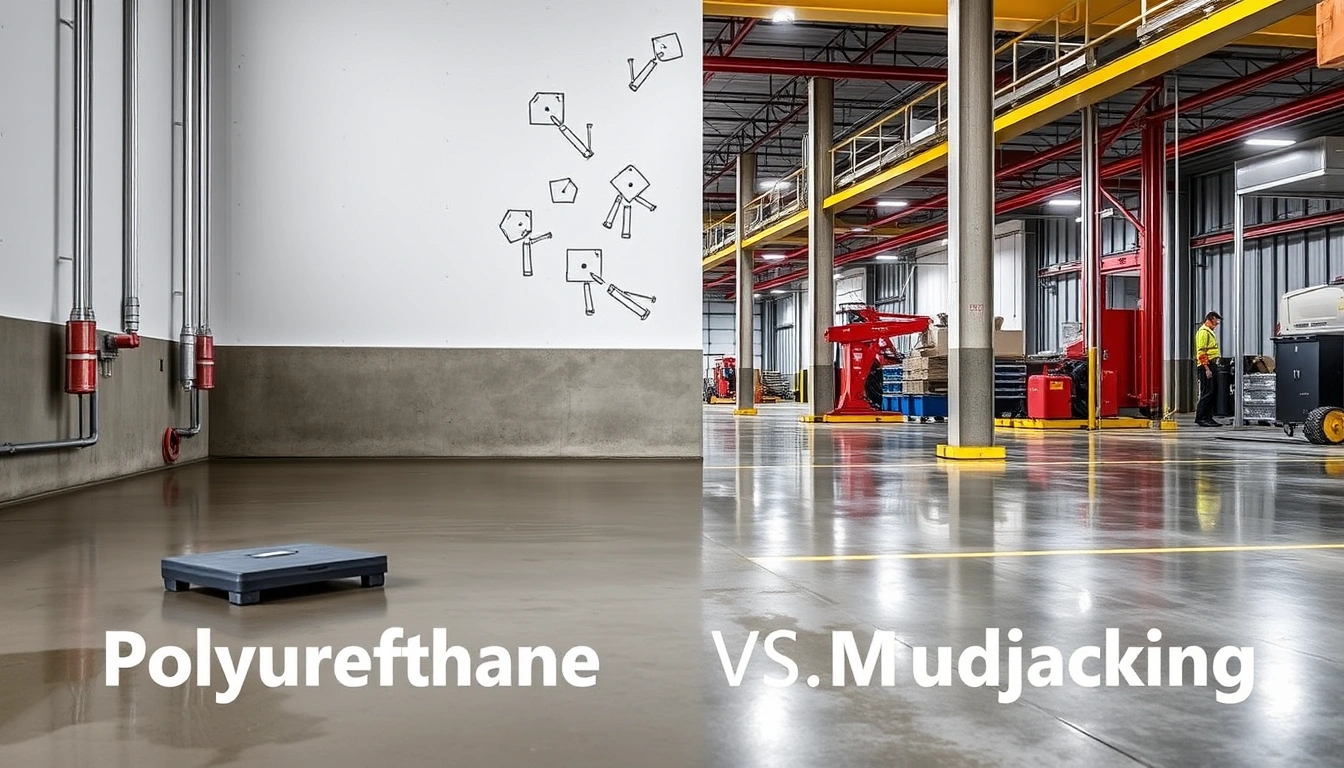
Now, let’s put them head-to-head. Here is how polyurethane injection and mudjacking stack up on the criteria that actually matter for an industrial floor decision in 2026.
| Criterion | Polyurethane Foam Injection | Mudjacking (Slurry Slabjacking) | Winner for Industrial Floors |
|---|---|---|---|
| Added Subgrade Weight | 2-4 lbs per cubic foot | 100-120 lbs per cubic foot | Polyurethane |
| Cure Time to Full Forklift Load | ~30 minutes | 24-72 hours | Polyurethane |
| Typical Compressive Strength (Final) | 18-24 PSI (closed-cell foam) | 3,000-5,000 PSI (cementitious) | Mudjacking (material strength) |
| Lifespan Under Continuous Forklift Traffic | 20+ years (properly specified) | 5-10 years (before re-sinking) | Polyurethane |
| Typical Cost per Square Foot (2026) | $3-$7 | $1-$3 | Mudjacking (upfront cost) |
| Hole Diameter for Injection | 5/8 inch | 2-3 inches | Polyurethane |
| Best For… | Active traffic areas, speed-critical repairs | Static loads, tight budgets | Polyurethane (most industrial cases) |
Should I use polyurethane or mudjacking for a warehouse floor with forklift traffic?
Without hesitation, you should use polyurethane foam injection. The repeated, dynamic wheel load of a forklift cycling over a mudjacked repair will cause the heavy slurry to compact or the subgrade beneath it to fail faster. Polyurethane foam’s closed-cell structure distributes the load more evenly and its negligible weight doesn’t stress the subgrade further.
Consider the operational math. A mudjacking repair costs $1.50 per square foot but requires a 48-hour cure. You lose two days of forklift access to that aisle. A polyurethane repair costs $5 per square foot but is ready in 30 minutes. The direct cost difference is offset by hours of lost productivity. For 2026 operations, the math almost always favors the faster cure.
Which lasts longer under heavy industrial loads, foam or slurry leveling?
Polyurethane foam injection lasts significantly longer under heavy industrial loads. While mudjacking material is harder (higher PSI), its weight and brittleness lead to faster failure under repeated stress. A properly installed polyurethane foam repair can maintain its lift for 20 years or more in a forklift environment, whereas mudjacking may need re-leveling every 5-10 years in the same conditions.
The failure mode is different. Mudjacking slurry can crumble at the edges under the scraping of forklift wheels, or the weight can cause localized soil compression. The foam is more resilient to this lateral shear. I’ve inspected mudjacked warehouse floors where the repair looked solid from above but had micro-fractures throughout the slurry matrix from the vibration, leading to a slow, total collapse of the repair after five years.
When to reconsider this entire comparison
There are four exception scenarios where the standard “polyurethane wins” verdict flips.
1. Severe, widespread subgrade erosion
If geotechnical investigation reveals massive voids or washout, neither method is a long-term fix. You need subgrade stabilization (like compaction grouting) first. Injecting foam or slurry into a cavity that extends 10 feet down is throwing money into a hole—literally.
2. The slab is structurally compromised
If the concrete slab itself is cracked into pieces with broken rebar, leveling it won’t restore integrity. You need slab replacement.
3. Extreme budgetary constraints for a non-critical area
If the area is a back warehouse corner used once a month, and the budget is absolute, mudjacking is a defensible “band-aid” choice. Just document that it’s a temporary measure.
4. Access limitations for equipment
In extremely tight spaces where polyurethane lifting rigs cannot maneuver, mudjacking’s more flexible pump setup might be the only physical option.
Our verdict: Which to choose and why
Choose polyurethane foam injection for any industrial floor that will see forklift traffic, wheeled carts, pallet jacks, or where operational uptime is critical. The rapid cure time, lightweight profile, and decades-long lifespan under dynamic load make it the superior engineering choice in 2026.
Choose mudjacking only for completely static, low-priority areas where upfront cost is the sole deciding factor and 24-72 hours of cure time is acceptable. Never use it for traffic lanes or production floors.
Neither method is appropriate if your slab is shattered or the subgrade has failed catastrophically. In those cases, industrial concrete leveling must be part of a broader remediation plan that may include slab replacement.
- Polyurethane foam injection adds only 2-4 lbs per cubic foot, while mudjacking slurry adds over 100 lbs per cubic foot — a critical difference for subgrade stability.
- A 30-minute cure time for polyurethane vs. 24-72 hours for mudjacking translates directly to reclaimed operational productivity.
- Under forklift traffic, polyurethane foam injection typically provides a 20+ year lifespan, compared to 5-10 years for mudjacking.
- The higher upfront cost of foam is often offset by reduced downtime and fewer repeat repairs over the floor’s life.
Common questions about polyurethane injection vs mudjacking for industrial floors
What is the primary difference between polyurethane injection and mudjacking for a factory floor?
The primary difference is material weight and cure time. Polyurethane foam injection uses a lightweight polymer that cures in 30 minutes, adding minimal load to the subgrade. Mudjacking uses a heavy cement slurry that takes 24-72 hours to cure and can overstress the soil beneath the slab.
Is polyurethane injection worth the extra cost for a plant floor with heavy machinery?
Yes. The extra cost is justified by the rapid cure time (restoring operations in under an hour) and the 20+ year lifespan under heavy load. Mudjacking’s lower upfront cost is often negated by operational downtime and the need for repairs every 5-10 years.
Why does mudjacking sometimes fail on warehouse floors with forklifts?
Mudjacking fails due to its weight and brittleness. The heavy slurry can cause further soil compression under repeated forklift loads. The material can also crumble from vibration and lateral shear forces created by turning forklift wheels, leading to re-sinking.
How much more does polyurethane foam injection cost compared to slurry slabjacking?
In 2026, polyurethane foam injection typically costs $3-$7 per square foot, while mudjacking costs $1-$3 per square foot. While foam is more expensive upfront, the long-term value comes from faster cure times and reduced need for future repairs under heavy traffic.
Which method is better for a sunken slab that holds static storage racks?
For static storage racks with no forklift traffic, mudjacking can be a cost-effective solution. The 24-72 hour cure time is manageable, and the lower cost is beneficial since dynamic load resistance isn’t a primary concern.
The bottom line
In the polyurethane injection vs mudjacking debate for industrial floors, the choice in 2026 is clear for most operational environments. Prioritize polyurethane foam injection for its engineered response to dynamic loads, rapid return to service, and long-term stability. Reserve mudjacking for minor, non-critical fixes on a tight budget. Your first step: get a geotechnical assessment if the sinking is severe, then get competing quotes that specify the exact material and cure time for your proposed repair.
For a deeper look at all available methods, consult our full guide on industrial concrete leveling approaches.
See also: industrial concrete leveling
Related: machine base concrete leveling
Related: approach slab settlement
Related: how to choose an industrial concrete leveling contractor
Related: return to service window
Related: slab settlement frequency