Forklift-Ready Timeline: How Long to Drive on Leveled Concrete
⏱️ 8 min read · Last updated: 2026
- Polyurethane foam injection typically reaches 90% of its full compressive strength in 15-30 minutes.
- Cement slurry (mudjacking) requires 24-72 hours to cure enough for light traffic and several days for heavy loads.
- Concrete cure time is dramatically affected by temperature: a 10°F (5.5°C) drop can roughly double the cure time for cementitious materials.
- A safe industry practice is to add a 25-50% time buffer to the manufacturer’s stated cure time for heavy industrial loads.
- The “return to service window” is determined by the material achieving a compressive strength that exceeds the forklift wheel load’s bearing pressure.
Planning your production restart requires clarity, not vague guesses. You need a specific timeline tied to the method used, and the critical variable most articles ignore is temperature. Getting this wrong doesn’t just risk rework; it risks cracking a brand-new slab under a loaded pallet. I’ve managed warehouses where every hour of downtime costs thousands, and I’ve seen projects delayed because the crew’s timeline didn’t account for the facility’s actual conditions. This guide cuts through the online noise.
The return-to-service clock starts at cure — not completion
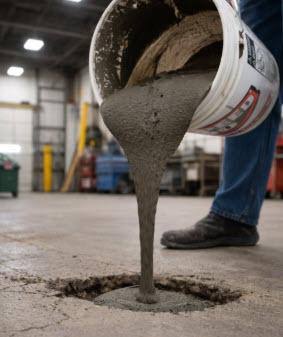
The clock for how long before forklifts can drive on leveled concrete starts not when the crew leaves, but when the leveling material begins its compressive strength gain. This is the material’s internal hardening process, where it transitions from a pliable state to one capable of bearing load. For polyurethane foam, this process is almost instant. For cement-based slurry, it’s a gradual chemical reaction measured in hours and days.
This fundamental difference in chemistry is why you get two wildly different answers online. One source might promise a same-day return, while another advises waiting a week. They’re both correct—for their specific material. Your planning must start by identifying which process was used at your facility.
The single most important factor in determining your return-to-service window is the material’s compressive strength gain curve, which begins the moment it’s injected or poured.
The real difference in cure time: foam vs. slurry
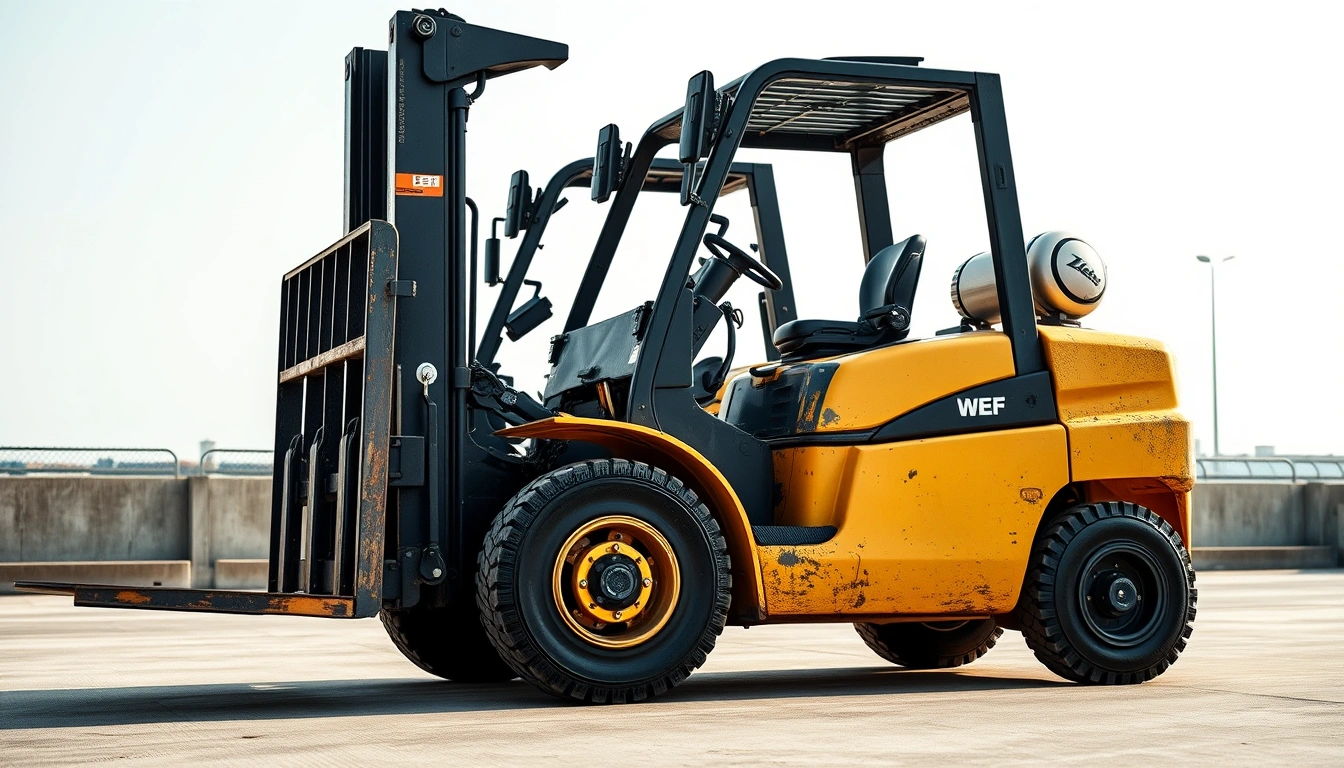
When comparing foam vs mudjacking for restarting operations, the difference is dramatic. Polyurethane foam injection cures faster, and it’s not even close. Foam is a closed-cell polymer that expands and hardens almost immediately upon injection. It achieves structural integrity within minutes, not days. This speed is the primary reason foam has become the dominant choice for forklift lane concrete leveling where downtime is measured in lost throughput.
In contrast, cement slurry, used in traditional mudjacking, relies on the hydration of Portland cement. This process requires the slurry to draw in moisture and air to form a strong crystalline structure. Even on a warm day, you cannot rush cement hydration. Forcing a loaded forklift onto a slab leveled with slurry before it has reached sufficient compressive strength will cause the material to compress or crack, undoing the leveling work. Therefore, understanding the cure time comparison is essential for any industrial floor repair timeline.
| Criteria | Polyurethane foam | Cement slurry (mudjacking) | Winner for |
|---|---|---|---|
| Time to walk on | Minutes | 2-4 hours | Immediate access |
| Time for light forklift (under 5,000 lbs) | 15-30 minutes | 24 hours | Minimal disruption |
| Time for heavy forklift (8,000+ lbs) | 30-60 minutes | 72+ hours | Urgent restarts |
| Full compressive strength | ~24 hours | 28 days (for full design strength) | Fast final readiness |
| Temperature sensitivity of cure | Moderate (cures slower in cold) | High (significantly slower in cold) | Cold environment operations |
| Ideal use case for fast restart | Active warehouses, manufacturing lines | Budget-sensitive, less time-critical areas | – |
Why temperature is the variable you can’t ignore
Temperature has a profound and non-negotiable effect on the cure process, especially for cementitious slurry. The chemical reaction of cement hydration is temperature-dependent. In cooler conditions, the molecules move slower, and the hydration process can stall. At 50°F (10°C), cement slurry might require double the cure time compared to 70°F (21°C). At near-freezing temperatures, it may not cure properly at all.
Polyurethane foam is less sensitive but not immune. The chemical reaction that creates the foam’s cellular structure slows in the cold, and the material needs ambient warmth to reach its designed properties. For any project planned in 2026, if your facility is unheated or in a cooler climate, you must add a significant buffer to the contractor’s standard estimate.
How to calculate your floor’s load-bearing readiness
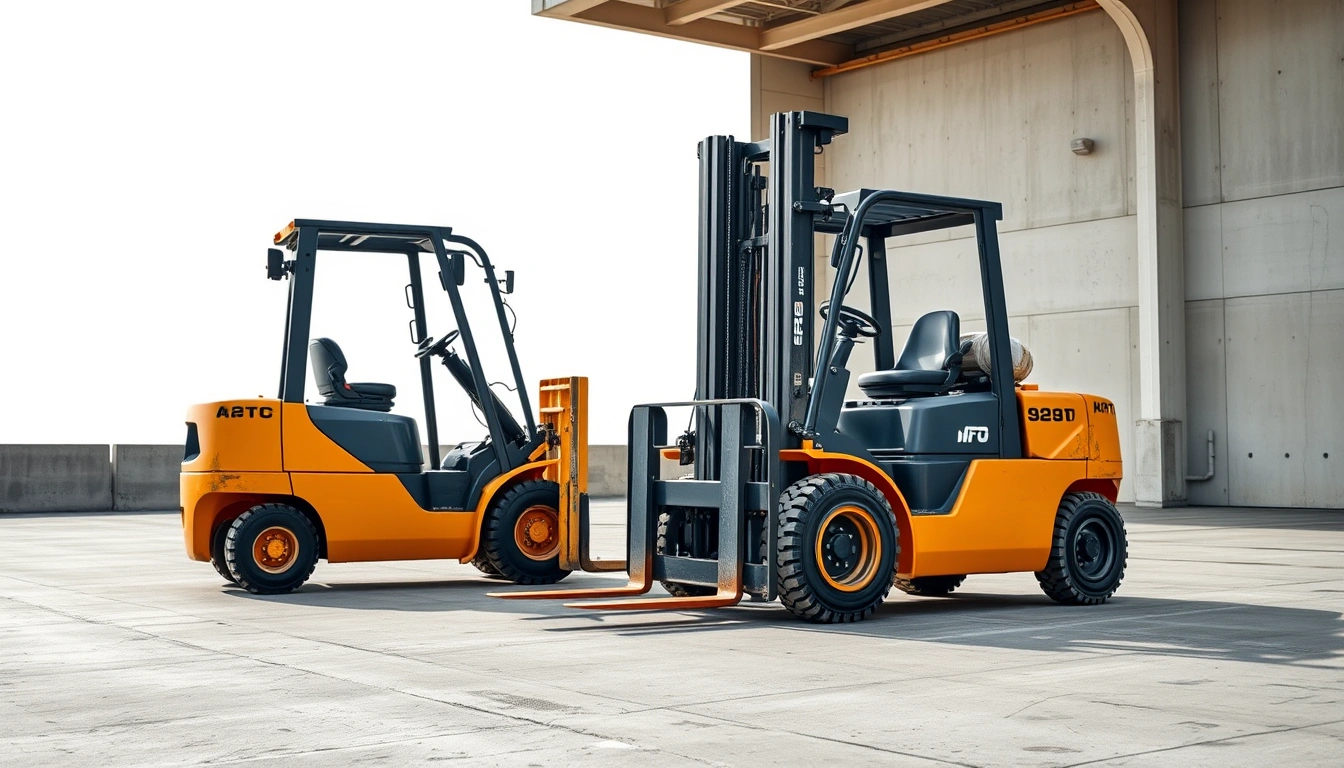
Determining when a leveled plant floor is safe to load with heavy equipment moves from guesswork to science when you consider the forklift wheel load. Every forklift has a published wheel load, which is the force exerted by a single wheel when the forklift is loaded to capacity. The leveled area must have a compressive strength that comfortably exceeds this pressure.
For example, a typical 5,000 lb forklift might have a rear wheel load of about 4,000 lbs. If the tire contact patch is 20 square inches, the pressure is 200 PSI. Your leveling material must provide a bearing capacity above this. Polyurethane foam typically achieves compressive strengths of 30-100 PSI within minutes and continues to climb. Cement slurry needs time to build this strength. This calculation is the true measure of readiness.
To know when your floor is ready, you need two numbers from your contractor: the material’s compressive strength at a specific time and the wheel load of your heaviest forklift. The material’s strength at the time of your planned restart must be higher. For more on material selection, explore our guide on choosing between foam and mudjacking.
Exception scenarios: when the standard timeline flips
While the 15-30 minute vs. 24-72 hour rule holds in most cases, several exceptions can dramatically change the calculus. These are the situations where you should stop and reassess before following the standard advice.
- Deep voids requiring massive material volume: If a slab was significantly settled and requires an unusually large volume of foam or slurry, the cure time for the bulk material may be longer than for a thin lift. The material generates less heat when injected in deep pools, slowing the cure.
- High-humidity or wet conditions: Excessive moisture can interfere with the chemical bond of polyurethane foam to the slab. It can also add extra water to cement slurry, weakening it and extending cure time. The floor must be bone dry.
- Extremely thin slabs over unstable subgrade: The leveling material’s performance is also dependent on the substrate. If the soil beneath is weak, the load distribution changes, and the timeline for safe loading may need to be extended to allow the entire system to stabilize.
- Use of additives or accelerants: Some contractors use additives in slurry to speed curing. While this can shorten the window, it often comes with trade-offs in final strength or durability. Always verify the performance data for the exact mix used.
Understanding these exceptions helps explain why answers on concrete leveling cost and timeline can vary so widely. It underscores the need for site-specific data.
Our verdict: which timeline to plan for in 2026
Choose polyurethane foam injection if your primary constraint is production downtime and you need to know how long before forklifts can drive on leveled concrete with the shortest possible window. The speed of its compressive strength gain is unmatched. It is the clear winner for active manufacturing plants, distribution centers, and loading areas where every hour of closure hits the bottom line. For machine base concrete work, it’s often the only option that makes sense.
Choose cement slurry (mudjacking) if your project is in a less time-critical zone, such as a storage area or perimeter lane, and your budget is the tightest priority. Accept the longer return-to-service window as part of the cost savings. Neither method should be chosen if the slab is severely deteriorated, has extensive cracking, or the settlement indicates a fundamental failure of the subgrade; in those cases, it’s time for a discussion about whether to level or replace the industrial slab instead.
- Polyurethane foam is ready for forklift traffic in under an hour; cement slurry needs 24 hours minimum.
- Temperature is a critical variable—cold conditions can double cure times for slurry.
- Always compare the material’s compressive strength at cure time against your forklift’s wheel load pressure.
- Add a 25-50% time buffer to the manufacturer’s estimate for heavy industrial loads.
Common Questions About how long before forklifts can drive on leveled concrete
What is the cure time for polyurethane concrete leveling?
Polyurethane concrete leveling material typically cures to handle foot traffic in under 5 minutes. For standard forklift traffic (up to 5,000 lbs), the common return-to-service window is 15 to 30 minutes post-injection in ideal conditions.
How to know when a leveled floor is ready for equipment?
You know a leveled floor is ready when the material’s compressive strength exceeds the bearing pressure of your equipment’s wheels. Request the material datasheet from your contractor and compare its 1-hour or 24-hour strength rating to your forklift’s wheel load calculation.
Foam vs mudjacking — which cures faster for restarting operations?
Foam cures dramatically faster. Polyurethane foam is typically ready for forklift traffic in 15-30 minutes, while mudjacking slurry requires a minimum of 24 hours for light traffic and up to 72+ hours for heavy equipment.
Why did my newly leveled slab crack under early loads?
Cracking under early loads is almost always due to one of three issues: the equipment weight exceeded the material’s compressive strength at that cure time, the subgrade was unstable, or the material did not achieve proper bond to the slab edge due to contamination or moisture.
How much production time is lost during industrial leveling?
For foam injection, direct production loss is often minimal—sometimes just the 15-30 minute cure time after work is complete. For mudjacking, plan for a minimum 24-hour closure of the leveled area. The total downtime also includes crew access time.
Does temperature really affect concrete leveling cure that much?
Yes, absolutely. For cement-based slurries, a 10°F (5.5°C) drop in ambient temperature can roughly double the required cure time. Polyurethane foam is less affected but still cures slower in cold conditions. Always adjust timelines for your facility’s temperature.
The Bottom Line
Planning for how long before forklifts can drive on leveled concrete requires a single piece of data: the material’s compressive strength at the time of your planned restart. For polyurethane foam, this window opens in minutes. For slurry, it opens in days. Your next step is to ask your leveling contractor two questions: “What is the compressive strength of your material at 1 hour and 24 hours?” and “What is the wheel load of my heaviest forklift?” The answer to your timeline is in the comparison of those two numbers.
For a broader context on choosing between methods and when replacement might be the better path, explore our pillar guide on industrial concrete leveling.
See also: industrial concrete leveling
See also: machine base concrete leveling
See also: forklift lane concrete leveling
Related: slab settlement frequency
Related: warehouse floor settlement causes
Related: concrete void filling under industrial slab