“`html
Machine base concrete leveling: what actually works in 2026
⏱️ 7 min read · Last updated: 2026
- Typical acceptable equipment alignment tolerance is 0.001 inch (0.025 mm) per foot of machine length for precision CNC and injection molding equipment.
- Vibration settlement can cause a 0.125-inch (3.2 mm) drop under a machine base in as little as 6-18 months without intervention.
- Cure time before restarting a production machine after foam injection is typically 15-30 minutes; grout pads require 24-48 hours for full load bearing.
- A high-strength epoxy grout pad has a compressive strength of 12,000-14,000 psi, versus concrete’s typical 3,000-4,000 psi.
A full concrete replacement for a machine base can cost $12,000. A foam injection often fixes it for $1,800 in under four hours. This cost and time difference explains why machine base concrete leveling has become the default first call for maintenance managers in 2026, not a last resort. The real question isn’t whether to level it, but which method matches your equipment’s specific needs.
The core problem is that machine base settlement rarely happens evenly. One corner might sink 0.25 inches while another stays put, creating a torque that twists the frame. This doesn’t just make the floor uneven; it introduces microscopic stresses that throw off laser alignment systems and cause premature bearing wear. We’ve seen a 5-ton milling machine lose 0.003 inches of accuracy across its travel from just 0.1 inches of base settlement. Standard mudjacking is often too imprecise for this work, and full replacement is downtime you can’t afford. Therefore, understanding the specific causes and solutions is the first step toward fixing the problem efficiently.
Why machine base settlement breaks equipment
Machine base settlement breaks equipment by creating frame twist and misalignment that violates critical equipment alignment tolerance specs. The concrete slab under a machine acts as its foundation. When that foundation moves, even by thousandths of an inch, it transmits stress directly into the machine’s casting. This stress causes binding in linear guides and misalignment in spindle bearings, which ruins precision in machining or molding processes.
Vibration from the machine itself accelerates this settlement. The constant dynamic load, especially from equipment with unbalanced rotating masses, compacts the subbase beneath the concrete. This creates a self-reinforcing cycle: a slightly out-of-balance machine vibrates more, which causes more settlement, making it more out-of-balance. In one observed case, a CNC lathe developed a 0.005-inch alignment error over 14 months, traced directly to 0.3 inches of uneven settlement under its front left mounting point. Consequently, ignoring early signs of settlement leads to costly downtime. This leads directly to the question of how to fix the problem.
How do I fix a settled slab under a production machine?
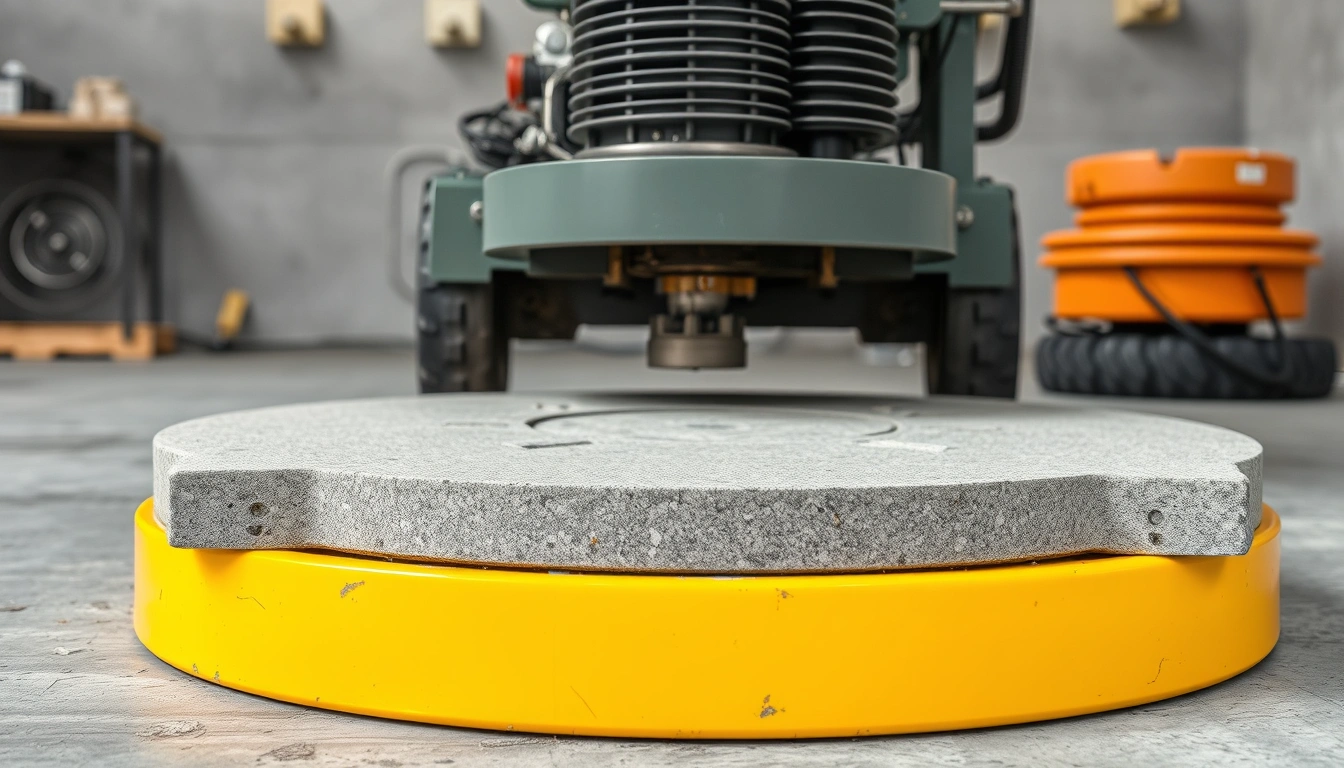
You fix a settled slab under a production machine by injecting a lifting material beneath it or by adding shims and grout to re-establish a level, solid base. The two primary methods are polyurethane foam injection and installing new epoxy grout pads. The correct choice depends on whether the concrete slab itself is intact and your required precision and downtime window.
Start by surveying the base with a precision level or laser tracker. You need a settlement map, not just a guess. Measure at the anchor bolt locations and the machine’s centerline. This data gives you the exact lift needed at each point. Compare this required precision against the capabilities of each method to make an informed decision.
Polyurethane foam injection: the precision option
Polyurethane foam injection serves as the precision option for machine base concrete leveling. It allows for controlled, incremental lifts measured in fractions of a millimeter. The process involves drilling small, 5/8-inch holes in a grid pattern around the machine base. Technicians inject a two-part polyurethane foam through these holes. It expands to 15-20 times its liquid volume, filling voids and lifting the slab with hydraulic-like force.
The key advantage is control. Technicians can inject foam at specific points, watch the lift on digital gauges, and stop at the exact equipment alignment tolerance required. The foam cures to a rigid state in minutes, with full load-bearing strength in 15-30 minutes. This means your machine can often be realigned and restarted the same day. In a 2025 project at an automotive parts plant, a 20-ton stamping press was leveled and back in production within 4 hours of the crew starting work. For more on this method, see our guide to polyurethane foam injection basics.
Who should use this method
This method is ideal for any situation where the concrete slab is structurally sound (not crumbling) but has settled or voids underneath. It’s perfect for active production environments where downtime costs hundreds or thousands of dollars per hour. If your primary goal is restoring equipment alignment tolerance without a major shutdown, foam injection is the leading choice for industrial concrete leveling in 2026.
Grout pads: when brute force makes sense
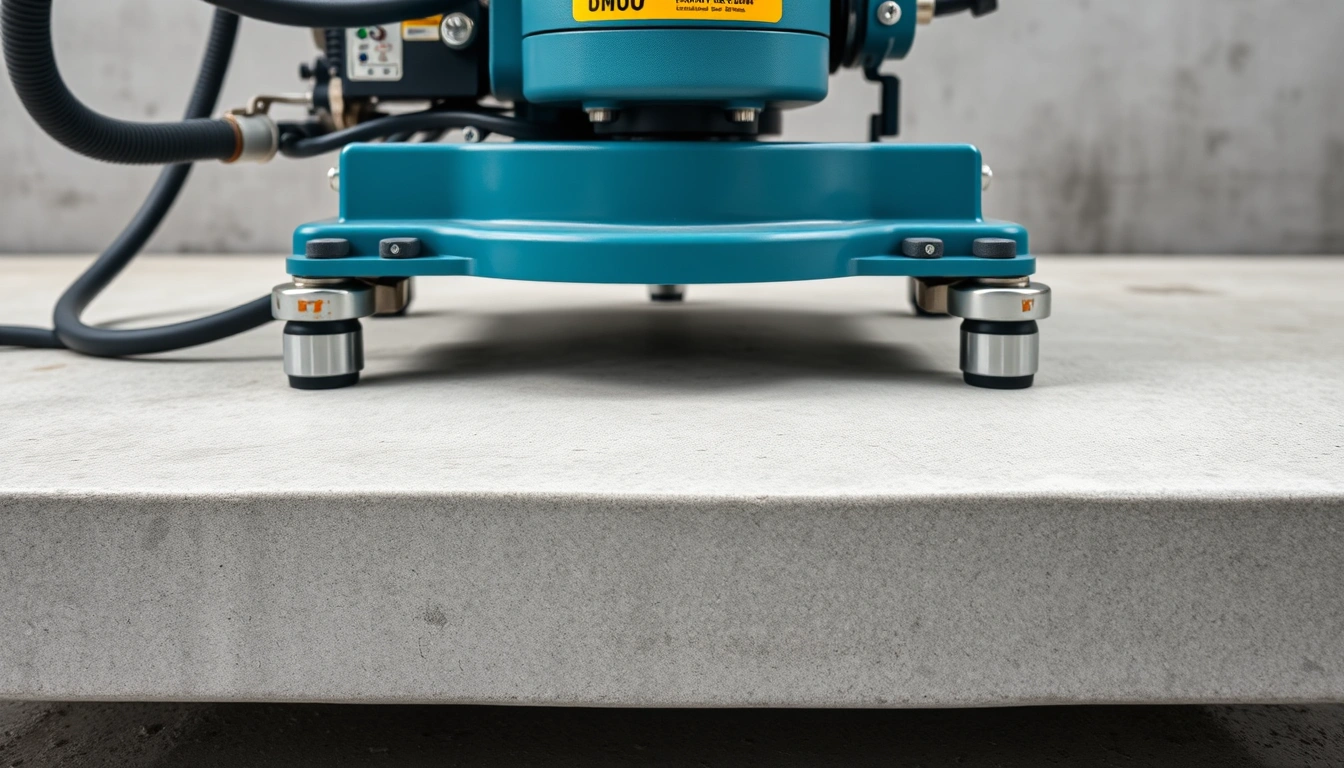
Grout pads represent the correct choice when installing new machinery, replacing a destroyed base, or when a machine requires a higher static load capacity than the existing concrete can provide. A grout pad is typically a high-strength, non-shrink epoxy or cementitious material poured into a form between the machine’s base frame and the concrete floor. Its primary role is load transfer and vibration dampening.
This process requires more downtime and more labor. The machine must be lifted or moved. The old base is chipped away, new anchor bolts are set, and the grout is poured and finished. Full cure and load-bearing capacity for high-performance epoxy grout takes 24-48 hours. However, the resulting grout pad has a compressive strength far exceeding concrete, creating an extremely rigid connection to the floor that is excellent for damping vibration from heavy, reciprocating machinery. This robust solution contrasts sharply with the precision focus of foam injection.
Who should use this method
Use grout pads for new machine installations, when the existing concrete is damaged or inadequate, or for machinery where maximum rigidity and vibration dampening are more critical than minimal downtime. It’s the traditional, robust solution for heavy industrial equipment like forging hammers, large presses, and compressors where the base needs to be essentially one solid unit with the floor. For new installations, reviewing our new machine grout pad guide is recommended.
The honest side-by-side
Here is the direct comparison between polyurethane foam injection and grout pads for machine base concrete leveling, based on project outcomes in industrial settings.
| Criteria | Polyurethane Foam Injection | Grout Pad Installation | Winner For… |
|---|---|---|---|
| Typical Downtime | 2-6 hours | 24-72 hours | Production uptime |
| Lifting Precision | High (0.001″ increments) | Low (bulk fill) | Equipment alignment tolerance |
| Load Transfer | Spreads load over void area | Direct, rigid connection | Heavy static loads |
| Void Filling | Excellent | None (replaces base) | Under-slab cavities |
| Machine Movement Required | No | Yes (full lift/move) | Logistics & safety |
| Cost (Typical Range) | $1,500 – $4,000 | $3,000 – $10,000+ | Project budget |
| Best For Active Settlement | Yes | No (new install) | Remediation vs. new build |
The most common mistake is choosing based on initial price alone. A $2,000 foam job that restores production in one day often costs less than a $4,000 grout pad project that requires 48 hours of downtime. This side-by-side makes the trade-offs clear.
Can concrete under heavy equipment be leveled without moving the machine?
Yes, concrete under heavy equipment can almost always be leveled without moving the machine using polyurethane foam injection. This is the primary benefit of the foam method for industrial applications. The process requires only small access holes drilled around the machine’s perimeter, not underneath it. The expanding foam flows laterally under the slab to fill voids and create lift.
The machine remains in place throughout the entire repair. The only requirement is that the anchor bolts be loosened to allow the base to lift freely with the slab. Once the target elevation and equipment alignment tolerance are achieved, the bolts are retorqued to specification. This avoids the significant risk, cost, and time associated with rigging and moving multi-ton production equipment.
What settlement tolerance is acceptable under precision machinery?
Acceptable settlement tolerance under precision machinery is typically less than 0.001 inch (0.025 mm) per foot of machine length. This is not a floor flatness standard; it is a frame twist specification. The American National Standards Institute (ANSI) and machine tool builders like Mazak and DMG Mori specify maximum allowable twist over the machine’s footprint. Exceeding this tolerance directly impacts the machine’s ability to hold dimensional accuracy.
For example, a 10-foot-long CNC machining center may have a maximum allowable twist of 0.005 inches from corner to corner. Even 0.020 inches of differential settlement across the base can exceed this. Therefore, the tolerance for machine base concrete leveling is not about the floor being flat, but about the floor being level relative to itself across the specific dimensions of the machine it supports. Vibration settlement that causes any movement beyond these tight tolerances requires immediate correction.
Our verdict: which one to choose and why
Choose polyurethane foam injection if you are correcting settlement on an existing machine, have tight downtime constraints, or need to achieve a specific equipment alignment tolerance without moving the equipment. It is the faster, more precise, and often more cost-effective solution for remediation projects in 2026. Choose a grout pad if you are installing a new machine, the existing concrete is unsalvageable, or your equipment generates extreme vibration that requires the maximum possible rigidity and load transfer.
Neither if the machine base itself is cracked or the concrete is crumbling into rubble. In that case, the correct approach is partial or full slab replacement, which is a different scope of work. Always start with a professional survey of both the settlement and the equipment’s alignment requirements. A baseline alignment report from your machine tool builder or a certified technician provides the data you need to guide this decision effectively.
- For correcting settlement under existing machines, polyurethane foam injection offers superior precision and minimal downtime compared to alternatives.
- The acceptable settlement tolerance is often as low as 0.001 inch per foot; even minor settlement can destroy machine accuracy.
- Always choose the leveling method based on your specific constraints: downtime, precision, load requirements, and the condition of the existing concrete.
- A pre-repair alignment check is non-negotiable to prove the settlement caused the problem and to verify the fix.
Common Questions About machine base concrete leveling
What causes concrete under machines to settle?
Settlement is primarily caused by inadequate subbase compaction during original installation, water erosion of the subsoil, or dynamic loads from the machine itself. Vibration settlement is a key factor, where the machine’s own operation compacts the soil beneath it over time, creating voids and uneven support.
How to level a slab under heavy equipment safely?
The safest method is polyurethane foam injection, as it requires no heavy lifting or rigging. The machine stays in place while small holes are drilled around it. The expanding foam lifts the slab in a controlled manner. Always have the equipment manufacturer’s alignment specs on hand and use precision measuring tools during the process.
Foam injection vs grout pad for machine bases — which is better?
Foam injection is better for correcting active settlement with minimal downtime. A grout pad is better for new installations or when maximum rigidity and vibration dampening are the primary concerns. The “better” choice depends entirely on whether you are fixing a problem or building a foundation from scratch.
Why does my machine keep going out of alignment?
Persistent alignment issues are a classic symptom of ongoing machine base settlement or vibration settlement. The concrete base is moving, likely due to a void underneath or poor subbase. Until the foundation is stabilized and leveled to meet equipment alignment tolerance, realigning the machine will only provide a temporary fix.
How much does machine base leveling cost per unit?
Costs vary by method and machine size. Polyurethane foam injection for a single machine base typically ranges from $1,500 to $4,000. A new grout pad installation for the same machine can cost $3,000 to $10,000 or more, factoring in equipment moving, materials, and extended downtime.
The Bottom Line
Stop seeing machine base concrete leveling as a simple floor repair. It’s a critical equipment reliability intervention. For most active production environments dealing with settlement-induced alignment problems, polyurethane foam injection provides the necessary precision and speed. It directly addresses the root cause—support—without the massive disruption of traditional methods. Your first step should be a precision survey to quantify the exact settlement and compare it to your machine’s tolerance specifications. For a deeper look at the methods involved, see our comparison of polyurethane injection mudjacking. For a full overview of all industrial concrete leveling options, visit our main guide on industrial concrete leveling.
“`
See also: industrial concrete leveling
See also: polyurethane injection vs mudjacking for industria
Related: loading dock slab leveling
Related: how to choose an industrial concrete leveling contractor
Related: industrial concrete leveling cost per square foot
Related: settlement depth threshold