“`html
Loading dock slab leveling: foam vs mudjacking in 2026
⏱️ 6 min read · Last updated: 2026
- Truck axle loads at loading docks range from 20,000 lbs to 80,000 lbs for standard semi-trailers.
- Most approach slabs settle 1-3 inches before operators notice dock leveler misalignment.
- Foam injection reaches load-bearing strength in 15-30 minutes. Mudjacking needs 24-72 hours.
- ACI recommends a minimum drainage slope of 1/8 inch per foot away from the building face.
- Foam injection runs $3-8 per square foot. Full replacement costs $8-15 per square foot.
Loading dock slab leveling in 2026 is faster and more affordable than most facility managers expect. Polyurethane foam injection lifts settled approach slabs to grade in under 30 minutes at roughly a third of the cost of full replacement. If your dock approach has dropped 1 to 3 inches and the subgrade beneath it is still solid, foam solves the problem the same day without shutting down your bay. The right fix, however, depends on why the slab settled and what condition the subgrade is in. A surface-level fix on a failed subgrade wastes money, while a full replacement when foam would suffice wastes time and production capacity.
Why does concrete settle near loading dock doors?
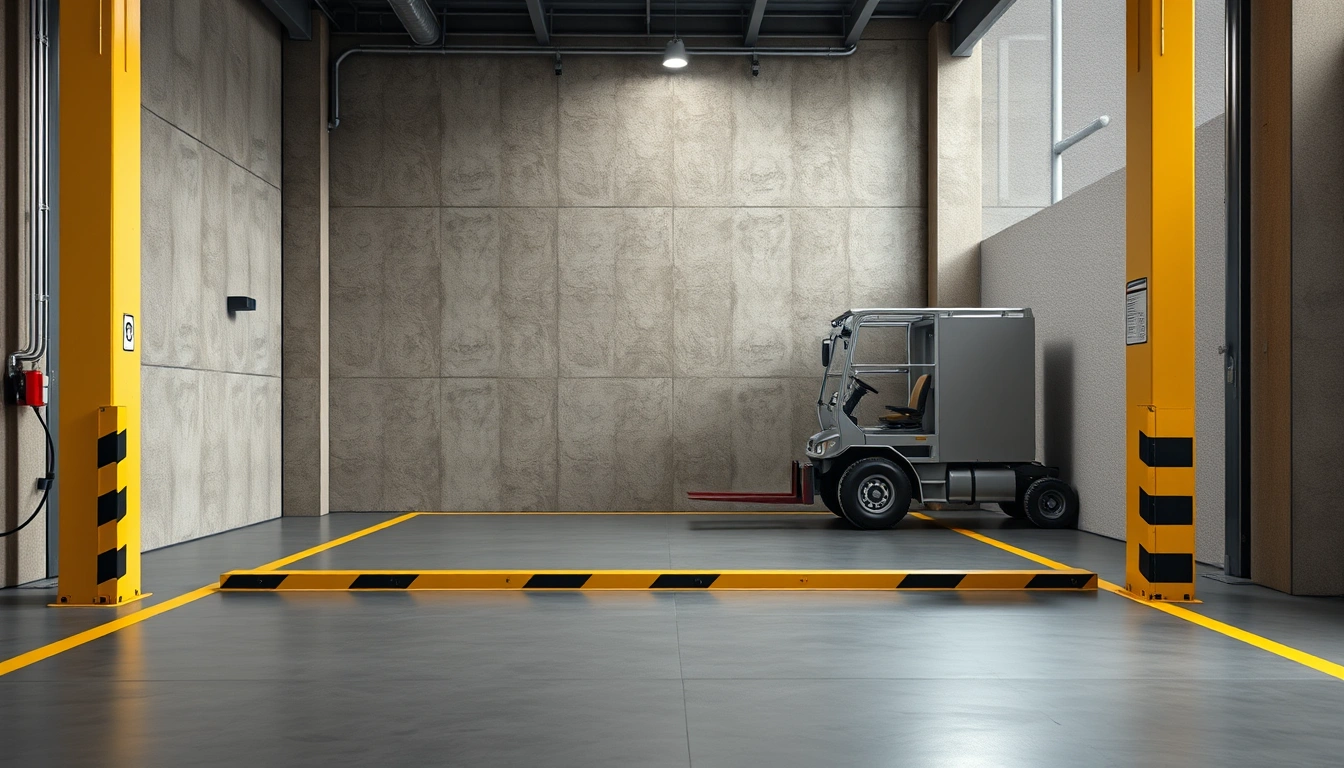
Concrete settles near loading dock doors because the approach slab endures a punishing combination of heavy repeated loads and poor drainage that indoor warehouse floors never face. The slab sits at the transition between the warehouse floor and the truck yard, which is the highest-stress zone in your entire facility.
Every time a loaded trailer backs in, the slab absorbs 20,000 to 80,000 pounds of repeated impact force across the truck’s axle footprint. Over months, this compacts or displaces the fill material beneath the concrete. The slab tilts, creating a low spot right at the dock door where the dock leveler needs a flat surface. High-throughput facilities with 40 or more truck movements per day see this accelerate dramatically. In some cases the slab drops 2 inches in under 18 months when the original fill was compacted to only 90% density.
Water makes the problem worse. When the drainage slope fails or reverses as the slab settles, rainwater pools against the building and seeps underneath, softening the subgrade. In cold climates, repeated freeze-thaw cycles intensify the damage by forming ice lenses beneath the concrete. ACI guidance requires a minimum drainage slope of 1/8 inch per foot away from the building. But once settlement reverses that slope, you get a self-reinforcing cycle of deterioration. This is why lifting a slab without addressing drainage is only a temporary fix.
How do I fix a sinking loading dock approach slab?
Three methods exist for fixing a sinking loading dock approach slab: polyurethane foam injection, mudjacking, and full slab replacement. Each works in the right scenario, but each wastes money in the wrong one.
Polyurethane foam injection
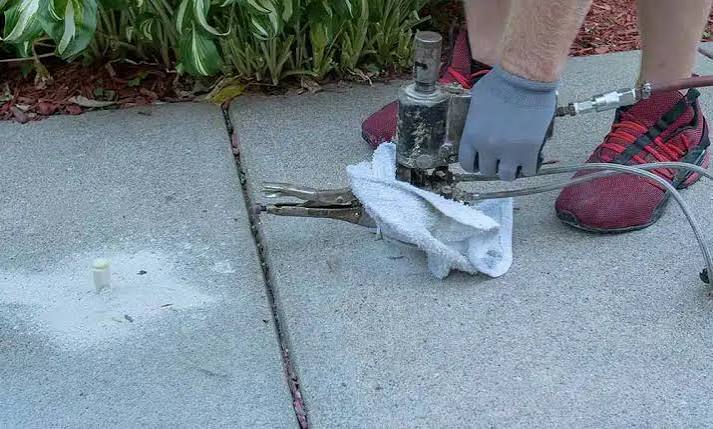
Polyurethane foam injection involves drilling small holes through the slab and injecting expanding two-component polyurethane beneath the concrete. The foam fills voids, compacts loose fill, and lifts the slab to level in real time while the crew monitors elevation with precision instruments. It cures to a compressive strength that typically exceeds the original concrete within minutes.
This method wins for most loading dock slab leveling situations because it addresses both root causes at once. It fills the erosion voids and restores elevation without adding weight to a compromised subgrade. Cost runs $3 to $8 per square foot with a 15 to 30 minute cure time. For a deeper look at the engineering differences, see our polyurethane injection vs mudjacking for industrial floors comparison.
Mudjacking
Mudjacking pumps a cement-based slurry under the slab through larger holes. It lifts concrete the same way, but the slurry weighs 100 to 120 pounds per cubic foot compared to just 2 to 4 pounds for foam. That extra weight loads an already-stressed subgrade further. The slurry also takes 24 to 72 hours to cure for heavy truck traffic, which means your dock bay sits idle for one to three days. While mudjacking costs less upfront at $2 to $5 per square foot, the cure time makes it a poor fit for high-traffic docks. Our industrial concrete leveling comparison covers the full cost-benefit breakdown.
Full slab replacement
Full replacement means demolishing the existing slab, re-compacting the subgrade, and pouring fresh 6,000 to 8,000 PSI concrete. It costs $8 to $15 per square foot and requires 7 to 28 days before full truck traffic resumes. This is the only method that completely resets the subgrade, which matters when the original fill was poorly compacted or settlement exceeds what foam can safely correct.
Loading dock slab leveling: polyurethane foam vs full replacement
Here’s the head-to-head comparison that matters most for facility managers. The right choice depends on the specific failure condition, not personal preference.
| Criteria | Polyurethane foam injection | Full slab replacement | Winner for… |
|---|---|---|---|
| Cost per square foot | $3–$8 | $8–$15 | Foam for budgets under $3,000 |
| Cost for typical 200 sq ft approach | $600–$1,600 | $1,600–$3,000+ | Foam by $1,000+ on average |
| Cure time for truck traffic | 15–30 minutes | 7–28 days | Foam for any active facility |
| Total dock downtime | 1–2 hours | 3–5 days (plus cure) | Foam for facilities with 30+ daily truck moves |
| Drainage slope correction | Yes — restores original slope by lifting slab | Yes — fresh pour with engineered slope | Tie — both correct drainage when done right |
| Subgrade improvement | Fills voids; does not re-compact loose fill | Full excavation and re-compaction | Replacement for failed subgrade |
| Dock leveler lip alignment | Restores flush alignment if settlement is under 3 inches | Restores to original spec | Tie for settlement under 3 inches |
| Durability under 80,000 lb repeated loads | 5-10+ years with proper drainage | 15-25+ years | Replacement for long-term permanence |
| Permit requirements | Usually none | Building permit typically required | Foam for speed and simplicity |
| Best for settlement amount | 1–3 inches | 3+ inches or total subgrade failure | Depends on severity |
For machine base concrete leveling adjacent to loading docks — such as conveyors or palletizers on the warehouse floor — foam injection is almost always the right call. Those machines need precision leveling within thousandths of an inch, and foam gives you real-time control that replacement pours cannot match.
Can dock approach slabs be leveled with trucks still using them?
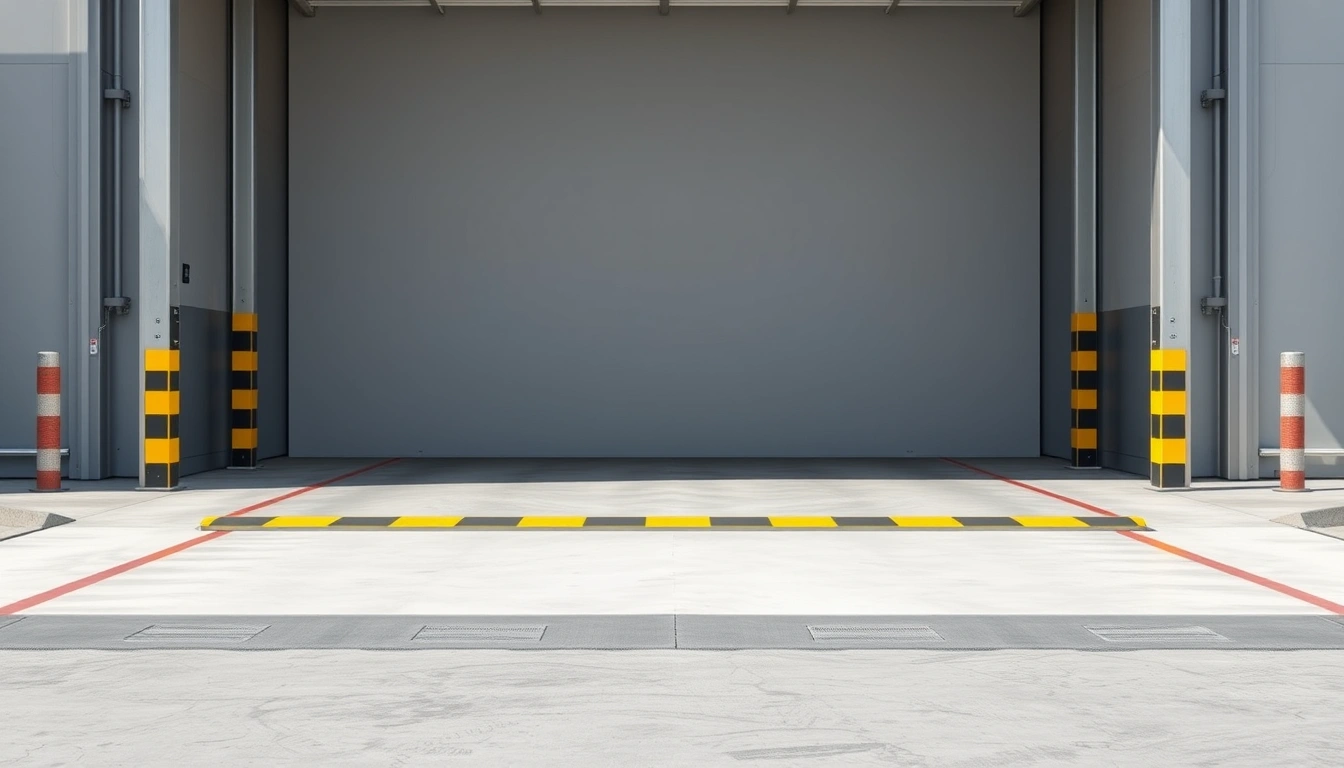
One of the biggest practical differences between these methods is downtime. Foam injection lets trucks use the dock approach within 15 to 30 minutes of completing the lift. Full replacement requires 7 to 28 days before concrete reaches sufficient strength for heavy axle loads. Mudjacking needs 24 to 72 hours of cure time.
At a high-volume facility, a single dock outage costs an estimated $500 to $2,000 per hour in delayed shipments and idle labor. Foam injection is the only method that qualifies as a same-day, same-shift repair. Crews finish a full approach slab lift and clean up while the dock is out of service for less than two hours.
A method that eliminates overnight cure time changes the ROI calculation entirely. The savings on a single avoided dock outage often exceed the full cost of the foam injection itself.
Mudjacking can be performed with limited truck access around the work area, but the 24 to 72 hour cure window means your dock bay sits idle regardless. If you operate seven days a week, that is two to three days of rerouted freight — a cost that often exceeds the savings over foam.
Why dock leveler alignment depends on what’s under the slab
Dock leveler alignment fails when the approach slab drops even slightly. Most levelers sit flush with the approach surface, creating a smooth transition from warehouse floor to truck bed. When the slab settles, the leveler lip misaligns with the truck bed, creating a bump or gap that forklift operators navigate dozens of times daily.
Here’s the key insight: the leveler mechanism itself is usually working fine. The problem lies underneath the approach slab, not within the leveler hardware. This is why replacing the dock leveler — a $3,000 to $8,000 repair — often fails to solve the underlying issue. You may end up replacing it again within 18 months.
When evaluating dock leveler alignment complaints, I check the approach slab first with a straightedge and level. In roughly 70% of cases, the leveler is functioning properly but the slab beneath it has dropped. Fixing the slab with foam injection restores flush alignment without touching the leveler mechanism. This is the kind of polyurethane injection vs mudjacking for industrial floors distinction that saves facility managers thousands in unnecessary equipment replacement.
When to reconsider this choice entirely
Foam injection is not always the right call. Choose full slab replacement under three specific conditions:
Subgrade failure, not just settlement. If the fill material was never properly compacted or has been washed away by years of poor drainage, foam will lift the slab but will not fix the underlying structural problem. Loose, uncompacted fill deeper than 12 inches calls for replacement.
Settlement exceeding 4 inches. Foam can correct up to about 4 inches in a single lift. Beyond that, the volume required becomes cost-prohibitive and the lift becomes less predictable. For severe drop-offs with a visible ledge at the dock door, demolition and replacement gives you a clean slate.
Deteriorated slab surface. If the concrete is spalling, cracked through full depth, or showing exposed rebar, lifting it with foam will not solve the surface problem. You need subgrade work combined with a fresh pour to address both issues at once.
Our verdict: which method to choose and why
Choose polyurethane foam injection if your approach slab has settled 1 to 3 inches, the subgrade is reasonably intact, and you need minimal downtime. This covers roughly 75 to 80 percent of loading dock slab leveling situations.
Choose full slab replacement if the subgrade has structurally failed, settlement exceeds 4 inches, or the slab surface is deteriorated beyond repair. Accept the higher cost and longer downtime as the price of doing it right the first time.
Neither if the settlement is under 1/4 inch and the dock leveler still aligns flush with the truck bed. At that threshold, monitor the slab annually and address drainage now before the problem compounds and more expensive intervention becomes necessary.
For most facilities in 2026, loading dock slab leveling with polyurethane foam injection delivers the best balance of cost, speed, and durability. Unless your subgrade has failed, the foam wins on every operational metric that matters to a facility running daily shipments.
- Most loading dock approach settlement (1-3 inches) is best corrected with polyurethane foam injection at $3-8 per square foot, cured in under 30 minutes.
- Full slab replacement is necessary only when the subgrade has failed or settlement exceeds 4 inches — it costs $8-15 per square foot with 7-28 days of cure time.
- Dock leveler misalignment is usually caused by approach slab settlement, not a broken leveler — fix the slab before replacing the equipment.
- Drainage slope correction is essential alongside any leveling method; without it, the problem recurs within 12-18 months.
Common questions about loading dock slab leveling
What causes loading dock slabs to settle in the first place?
Three primary factors cause loading dock slabs to settle. First, repeated heavy truck axle loads (20,000 to 80,000 lbs) compact or displace the subgrade. Second, poor original fill compaction during construction leaves the subgrade vulnerable. Third, water infiltration softens the subgrade when drainage slope fails or reverses. In cold climates, repeated freeze-thaw cycles intensify the damage.
How to level a dock approach slab step by step?
First, measure the settlement with a straightedge and level. Second, assess the subgrade — if fill is intact, proceed with polyurethane foam injection. The crew drills small holes, injects expanding foam, and lifts the slab to grade in real time. Third, patch the injection holes. The process takes 1 to 2 hours per slab.
Foam vs replacement for dock approaches — which is better?
Loading dock slab leveling with foam injection is better for 1 to 3 inches of settlement when the subgrade is intact, at $3 to $8 per square foot with a 15 to 30 minute cure. Full replacement is better for subgrade failure or settlement over 4 inches, at $8 to $15 per square foot with 7 to 28 days of cure time. About 75 to 80 percent of cases fall in the foam range.
How long does polyurethane foam injection last under heavy truck loads?
Polyurethane foam injection on loading dock approach slabs typically lasts 5 to 10 or more years under regular heavy truck traffic, provided the drainage slope is corrected. The foam itself does not degrade under repeated 80,000 pound axle loads. Re-settlement most often traces to unaddressed drainage issues rather than foam failure.
The bottom line
Most loading dock slab leveling jobs in 2026 do not need a full tear-out. If your approach slab has dropped 1 to 3 inches and the subgrade is still solid, foam injection fixes the problem in hours at a third of the replacement cost. Full replacement earns its keep only when the subgrade itself has failed.
Check your dock approach slab this week. Grab a straightedge, lay it across the slab near the door, and measure the gap. If it exceeds 1/4 inch, get a quote from a contractor who works specifically with industrial concrete leveling — not a residential driveway company. The equipment and engineering requirements are fundamentally different at loading dock scale. For the full picture on when leveling beats replacement, see our industrial concrete leveling comparison guide.
“`
See also: industrial concrete leveling
See also: machine base concrete leveling
See also: polyurethane injection vs mudjacking for industria
Related: contractor warranty
Related: settlement depth threshold
Related: forklift wheel load