Concrete void filling under industrial slab: what works
⏱️ 7 min read · Last updated: 2026
- Polyurethane injection port spacing is typically 3–5 feet on center for void filling; 1–3 feet for slab lifting operations.
- Closed-cell polyurethane foam expands 15–25 times its liquid volume, reaching 90% compressive strength within 15 minutes of injection.
- Industrial floor slabs require a minimum subgrade soil bearing capacity of 2,000 PSF for standard warehouse loads; heavy industrial applications need 3,000–5,000 PSF.
- Post-injection fill verification is most commonly performed with ground-penetrating radar (GPR) scanning across the injection grid.
- Polyurethane void filling costs $3–$8 per square foot; compaction grouting runs $8–$15 per square foot as of 2026.
A $14,000 replacement quote. A $4,200 foam injection. Two years later, the foam-injected slab in Columbus still carries 50,000 pounds of racking without a crack.
The operations manager who chose foam had researched concrete void filling under industrial slab for weeks. Every article he found stopped at “consult a professional.” He had already consulted three. Two recommended demolition. The third — a contractor who borescoped the void — recommended polyurethane foam. When I inspected the facility in early 2026, the slab was level, sealed, and unremarkable. That is exactly what a successful repair should look like.
How voids under a warehouse slab are filled
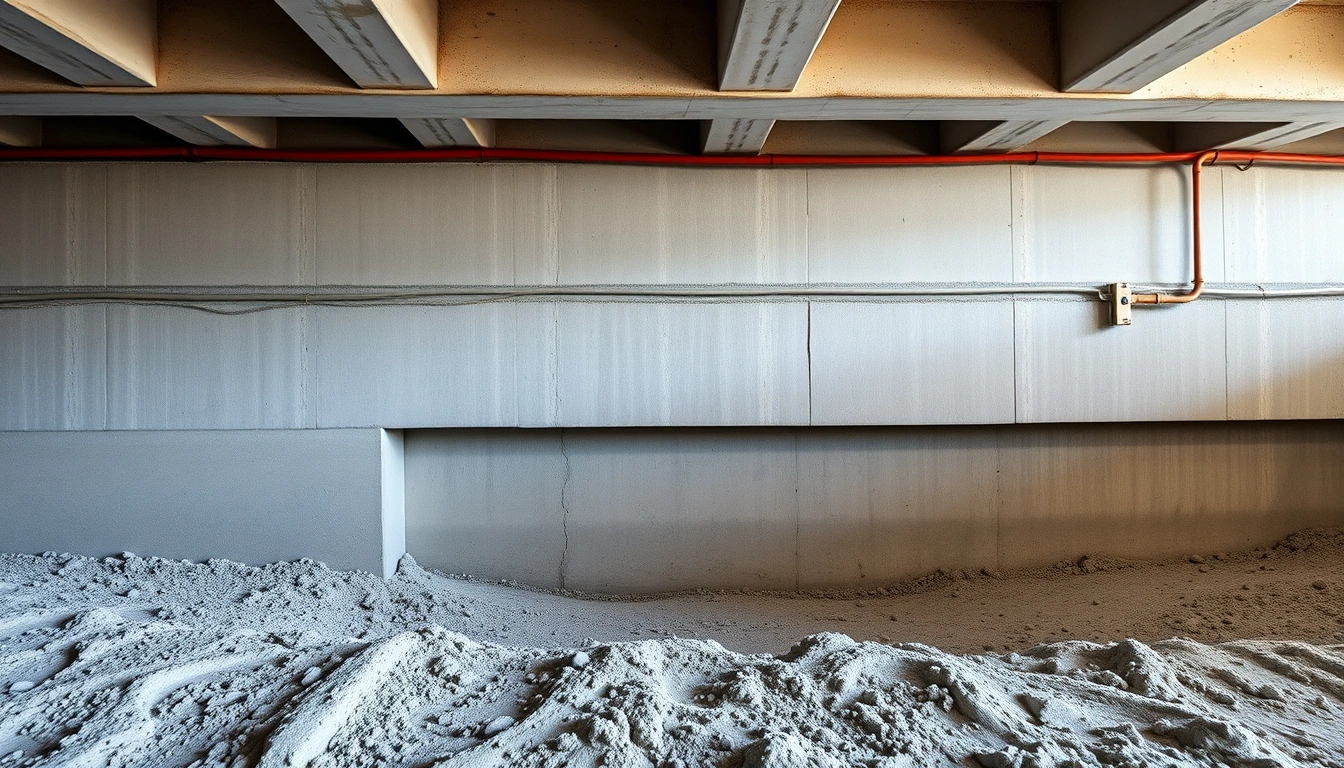
Voids under industrial slabs form when soil beneath the concrete settles, erodes, or was never properly compacted. The gap between slab and subgrade grows over time, leaving the floor unsupported. Concrete void filling under industrial slab repairs address this by drilling small ports through the concrete and injecting material into the gap to restore load transfer.
The most common cause of voids is inadequate subgrade compaction during original construction. Soil placed in lifts that were too thick consolidates under load over time. Water intrusion accelerates the process — a cracked drain or failed vapor barrier can wash away fine particles for years before anyone notices. According to ACI 360R, “Design of Slabs on Ground”, proper subgrade preparation is the single most important factor in slab-on-ground performance, yet it is also the most commonly compromised step during construction. Other contributors include heavy equipment vibration, freeze-thaw cycles, and decomposing organic material in the subgrade.
Two methods dominate industrial applications. Polyurethane foam injection uses a two-part closed-cell foam injected through 5/8-inch to 7/8-inch ports. The foam expands to fill the void, hardens in minutes, and can lift the slab back to level. Compaction grouting uses stiff, low-mobility cementitious grout injected under 500–1,500 PSI through 2- to 3-inch ports. Instead of flowing into open space, the grout pushes surrounding soil together and densifies it from the outside in.
Understanding how the process works is the first step. The next is choosing the right material — which depends on void size, soil conditions, and the loads your floor must support.
Polyurethane foam injection vs. compaction grouting
Polyurethane foam injection wins for most concrete void filling under industrial slab projects. It is faster, less disruptive, and provides immediate load-bearing capacity. But compaction grouting is the right call when subgrade soil is structurally weak and needs densification — not just the void above it.
The key distinction: foam fills the gap between slab and soil. Grout strengthens the soil beneath that gap. If your subgrade sits on loose, uncompacted fill, foam alone will not solve the problem. You will fill the void and watch it return within 18 months.
Key insight: Filling a void and lifting a slab are different operations requiring different materials, port densities, and quality verification methods. Treating them as the same job is the most expensive mistake in this industry.
| Criteria | Polyurethane foam injection | Compaction grouting | Winner for… |
|---|---|---|---|
| Primary mechanism | Expands to fill void; lifts slab | Compacts surrounding soil via pressure | Depends on root cause |
| Typical port spacing | 2–4 feet on center | 3–6 feet on center | — |
| Port diameter | 5/8″ to 7/8″ | 2″ to 3″ | Minimal disruption: foam |
| Cost per square foot | $3–$8 | $8–$15 | Tight budgets: foam |
| Time to load-bearing | Under 1 hour | 24–72 hours | Active operations: foam |
| Soil improvement | None | 50–300% bearing capacity increase | Weak subgrade: grouting |
| Slab lifting capability | Yes — precise and controlled | Limited — not its primary purpose | Need leveling: foam |
| Disruption level | Minimal — same-day return to service | Moderate — patching required | Occupied facility: foam |
| Best soil type | Any (fills gap, does not treat soil) | Sand and granular soils | Granular soils: grouting |
| Moisture resistance | High — closed-cell foam is hydrophobic | Low — cementitious grout can wick moisture | Damp environments: foam |
Foam wins on speed and cost. A two-person crew can handle 2,000 square feet in a single day. The foam reaches 90% compressive strength in 15 minutes, and the slab becomes load-bearing within one hour. Closed-cell foam also acts as a moisture barrier, absorbing less than 2% water by volume. For details on foam lifting applications, see our guide to polyurethane concrete lifting. Cost runs $3 to $8 per square foot. At the Columbus facility, the total was $4,200 for 1,800 square feet — roughly 70% less than the replacement quote.
Foam has one significant weakness: it does not improve soil beneath the void. For floors supporting point loads over 500 PSF from steel racking, soil bearing capacity must be adequate on its own.
Compaction grouting increases soil bearing capacity 50–300%, depending on soil type. Sandy and granular soils respond best. Clay soils are more resistant and may need supplemental approaches. The trade-off is real: grouting costs $8 to $15 per square foot, requires larger ports with concrete patching afterward, and needs 24–72 hours before the slab can bear loads.
Beyond choosing the right material, one detail determines whether the repair lasts or fails within months: port spacing.
Injection port spacing
For concrete void filling under industrial slab work, standard port spacing is 3 to 5 feet on center for foam and 3 to 6 feet for grouting. Getting this wrong is the most common reason repairs fail to deliver lasting results.
Filling a void and lifting a slab require different port densities. For filling alone, wider spacing works because foam expands 15 to 25 times its liquid volume and flows laterally to reach connected voids from a single injection point. For lifting, foam ports need 1 to 3 feet of spacing to generate uniform upward pressure. Spacing too far apart during lifting creates new cracks instead of raising the slab evenly.
After injection, verify complete fill with ground-penetrating radar scanning across the injection grid. Compare pre- and post-scan images to confirm the void signature is eliminated. Keep the scan documentation — it matters for warranty claims and future maintenance decisions. GPR verification costs $500 to $1,200 but eliminates callbacks that typically run $2,000 to $5,000 per revisit. Contractors attribute 30–40% of callbacks to incorrect port spacing or skipped verification — not material failure.
Before injection begins, though, one measurement determines whether foam or grout is the right choice at all: soil bearing capacity.
Soil bearing capacity: the number that determines everything
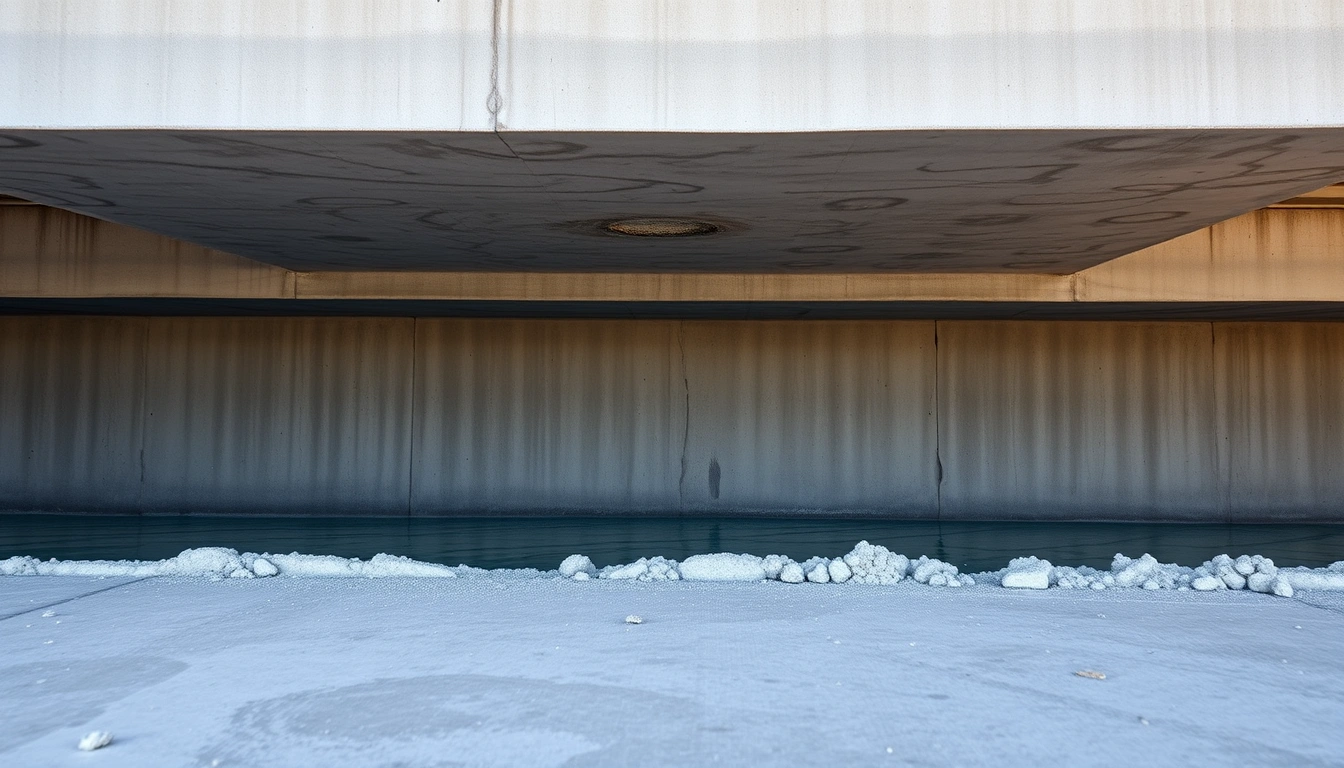
Soil bearing capacity is the weight the ground beneath your slab can support per square foot. For industrial floors, the minimum target is 2,000 PSF for standard warehouse loads. Heavy industrial applications — steel manufacturing, automotive assembly, heavy equipment storage — need 3,000 to 5,000 PSF.
Most void filling contractors never measure this number. If the soil beneath a void has a bearing capacity of only 800 PSF, filling the gap with foam is a temporary patch. The slab will settle again, sometimes within months. This is where concrete void filling under industrial slab projects split into two outcomes. If the subgrade is competent — properly compacted granular material with adequate bearing capacity — filling the void is a durable fix that lasts decades. If the soil itself is the problem, you are paying to fill a void that will return.
Three field tests evaluate subgrade conditions. Standard Penetration Tests measure soil resistance — an N-value of 15 or higher typically indicates adequate capacity. Dynamic Cone Penetrometers identify soft spots across large areas faster and more cheaply. Plate Load Tests apply measured force through a steel plate and measure deflection for the most direct bearing capacity number.
Soil testing costs $500 to $2,000. That is trivial compared to paying for the same repair twice. Our industrial concrete leveling statistics page includes bearing capacity data from projects across multiple soil types and regions.
With soil data in hand, it becomes clear when void filling delivers a permanent fix — and when it does not.
When void filling works — and when it does not
Void filling stops slab sinking when the root cause is a gap between slab and subgrade. It does not work when the cause is active water erosion, ongoing soil settlement, or structural slab failure.
Permanent fix: About 60–70% of industrial void cases fall into this category. The void formed during original construction from inadequate compaction. The soil has since stabilized under load. Filling the gap restores load transfer, and the problem does not recur.
Temporary fix: Water actively washing away fines, compressible clay still settling, or organic material decomposing will form new voids beneath the repair. I have tracked facilities that went through three foam injections over five years before someone tested the subgrade and found active water migration from a failed interior drain.
No help at all: When the slab has cracked through and lost structural integrity, filling the void beneath it is like inflating a tire with a gash. The material goes somewhere, but nothing holds. Our comparison of industrial concrete leveling methods details when each approach applies.
When either condition is not met, additional investigation must come first. Our guide on when to level vs replace industrial concrete slab walks through the cost-benefit math with real project data.
Exception scenarios
Even when foam is the recommended method, four situations change the plan entirely.
Active water intrusion: Foam fills the current void but does not stop erosion. You need drainage correction — interior drain tile, exterior grading repair, or a sump system — before any void filling is worth the investment.
Organic or peat subsoil: Decomposing soil compresses continuously. No injection method stops decomposition. These soils need excavation and replacement with engineered fill before slab repair begins. At a dairy plant in Wisconsin, three foam injections failed over two years before soil testing revealed 18 inches of decomposing peat beneath the slab.
Voids deeper than 12 inches: Very deep voids can be too large for foam to bridge evenly. Compaction grouting, which densifies soil from the bottom up through controlled injections, handles deep voids more reliably.
Post-earthquake or differential settlement: If the void is part of broader foundation movement, a structural engineer must evaluate the full scope first. Our guide on when to level vs replace industrial concrete slab covers the decision framework for these larger situations.
In each case, address the root cause before returning to void filling. Skipping that sequence is how projects that should cost $6,000 become $18,000 over three years of re-injection.
- Polyurethane foam injection is the faster, cheaper option for most industrial void filling — but it does not improve weak subgrade soil.
- Injection port spacing must match the operation: 3–5 feet for filling, 1–3 feet for lifting. The wrong spacing causes 30–40% of callbacks.
- Test soil bearing capacity before any injection. If it falls below 2,000 PSF, foam alone will not deliver a lasting fix.
- Post-injection GPR verification costs $500–$1,200 and eliminates most callbacks — always worth the investment.
Common questions about concrete void filling under industrial slab
What is concrete void filling under industrial slab?
It is the process of injecting material through drilled ports into the gap between a concrete slab and the subgrade soil. The material fills the empty space, restores contact, and re-establishes load transfer. It is distinct from slab lifting, which uses the same injection process to raise a settled slab back to its original level.
How to fill voids under an industrial floor step by step?
The standard process: (1) test soil bearing capacity beneath the void, (2) map the void with ground-penetrating radar, (3) drill injection ports at 3–5 feet on center, (4) inject polyurethane foam or compaction grout, (5) verify completeness with post-injection GPR scanning. A typical 2,000 sq ft section takes 4–8 hours from start to finish.
Void filling vs slab lifting — which do I need?
Void filling addresses the gap without changing slab elevation — ideal when the slab is level but unsupported beneath. Slab lifting uses controlled foam injection to raise a settled slab back to its original position. Many jobs combine both: filling the void first, then lifting where settlement has created hazards for forklifts and foot traffic.
How much does subgrade void filling cost?
Polyurethane foam void filling costs $3–$8 per square foot as of 2026. Compaction grouting runs $8–$15 per square foot. Total project cost depends on void depth, port density, and site accessibility. A typical 2,000 sq ft warehouse section averages $6,000–$16,000 for foam injection or $16,000–$30,000 for grouting. Pre-work soil testing adds $500–$2,000.
Can void filling be done while the warehouse is operational?
Polyurethane foam injection usually works while the warehouse stays open. The ports are small (5/8″–7/8″), the work area is limited, and the slab is load-bearing within one hour. Compaction grouting requires more space and longer cure times (24–72 hours), making it harder to perform in an active facility without temporary restrictions.
The Bottom Line
For most industrial facilities, polyurethane foam injection is the right first move for concrete void filling under industrial slab repair. It is fast, costs $3 to $8 per square foot, and delivers immediate load-bearing capacity with minimal disruption. Compaction grouting is the better choice only when soil testing confirms the subgrade is below 2,000 PSF and needs densification.
One step changes everything: test the soil before you inject. A $500 to $2,000 bearing capacity test determines whether foam is a permanent fix or a temporary patch. Start with soil testing and a GPR scan. Those two data points tell you and any contractor exactly which method fits your situation.
Our guide to choosing an industrial concrete leveling contractor covers the questions to ask and the red flags to watch for. For the full comparison of methods and costs, see our industrial concrete leveling parent guide.
See also: industrial concrete leveling
See also: when to level vs replace industrial concrete slab
See also: industrial concrete leveling statistics
Related: phased scheduling
Related: industrial floor slab repair